
OUI Accident Penalties in Massachusetts: What You Face
OUI Accident Penalties in Massachusetts: What You Face
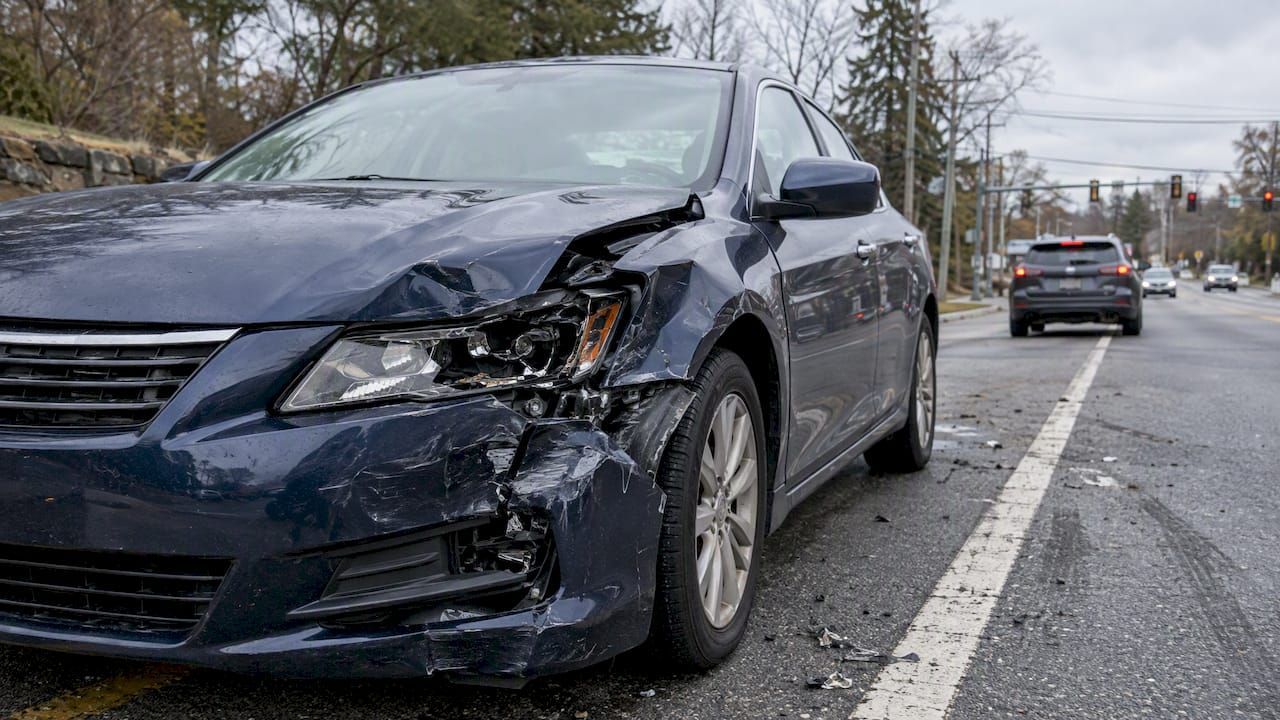
An OUI that involves a crash can be charged far more seriously than a standard OUI. If the accident caused serious bodily injury, Massachusetts law allows a prison sentence of up to 10 years. If someone died, the charge can be a felony such as motor vehicle homicide. Even when nobody was hurt, you still face a separate license fight at the RMV. This guide explains how the penalties are structured, where people get surprised, and what to do in the first days.
TL;DR
- An OUI crash with no serious injury is usually charged as a standard OUI, but prosecutors can add other charges. Serious bodily injury moves the case into G.L. c. 90, § 24L, with a mandatory minimum of six months and a possible 10 years.
- A death can lead to a felony charge of motor vehicle homicide or manslaughter by motor vehicle, with no continuance without a finding.
- The criminal case and the RMV license case run on separate tracks. A refusal suspension has a 15-day window to challenge.
- Insurance and license restoration consequences outlast the court case, so plan for them early.
- Decisions made in the first days, especially about the RMV hearing, often shape the whole case.
Table of Contents
- Why a crash changes an OUI case
- OUI with property damage but no serious injury
- OUI causing serious bodily injury (§ 24L)
- OUI with a child in the car (§ 24V)
- Fatal crashes: vehicular homicide and manslaughter
- The RMV case: a separate fight over your license
- Insurance and other costs people forget
- Our perspective
- What to do in the first 72 hours
- Talk to us about your case
- FAQ
- Sources
Why a crash changes an OUI case
A standard first-offense OUI is a misdemeanor. A crash changes how the Commonwealth sees the facts. Police have a scene, witnesses, vehicle damage and often medical records. Those facts let a prosecutor argue that you drove recklessly or negligently, and that the driving hurt someone.
Three questions drive the penalty:
- Was anyone seriously injured or killed? That decides whether you face a misdemeanor or a felony-level statute.
- Was a child under 14 in your vehicle? A separate statute adds mandatory jail time.
- Did you take or refuse the chemical test? That decides your RMV suspension, which is separate from any sentence.
For the baseline penalties of a simple OUI with no crash, see our guide to OUI penalties in Massachusetts. Below we cover what a crash adds.
OUI with property damage but no serious injury
A fender-bender or a single-car crash into a pole is typically charged as a standard OUI under G.L. c. 90, § 24, often with companion traffic charges such as negligent operation or marked lanes violations. The crash itself does not convert the case into a felony. It does, however, give the prosecutor a stronger story about impairment, and judges may be less receptive to a lenient resolution when a collision occurred.
The crash also matters for money. If you damaged someone's car or property, expect an insurance claim and possibly a civil demand separate from the criminal case. Anything you say to an adjuster can be used in the criminal case, so speak with a lawyer before giving a recorded statement.
OUI causing serious bodily injury (§ 24L)
This is where the penalties jump. The statute covers operating with a blood alcohol concentration of 0.08 or greater, or under the influence of liquor or drugs, while operating recklessly or negligently so that the safety of the public might be endangered, and causing serious bodily injury.
According to the text of Section 24L, the sentence is one of two options:
| Sentence option | Term | Fine |
|---|---|---|
| State prison | Not less than 2½ years nor more than 10 years | Up to $5,000 |
| Jail or house of correction | Not less than 6 months nor more than 2½ years | Up to $5,000 |
The same statute adds restrictions that matter in practice. The sentence cannot be reduced below six months or suspended. A person convicted under this subsection is not eligible for probation, parole or furlough, or for sentence deductions, until serving at least six months. Prosecutions under this subdivision cannot be continued without a finding or placed on file.
That last point is critical. In many OUI cases, a negotiated outcome such as a continuance without a finding (CWOF) is the realistic goal. Under § 24L that route is closed by statute. The defense therefore usually centers on the elements the Commonwealth must prove: impairment, reckless or negligent operation, and whether the injury legally qualifies as serious bodily injury. Causation is a real issue too. Was your driving the cause of the injury, or did another driver's conduct, road conditions or a medical complication play a role? A careful review of police reports, dashcam or bodycam footage, and medical records is where these cases are often won or narrowed.
OUI with a child in the car (§ 24V)
Driving under the influence with a passenger under 14 has its own statute, G.L. c. 90, § 24V. A crash is not required, but a crash with a child aboard makes a hard case harder. The penalties for a first offense include jail in a house of correction for a term that starts with a 90-day mandatory minimum and fines in the range of $1,000 to $5,000. Repeat offenses carry a higher mandatory minimum of six months. These are charged in addition to the OUI itself.
Parents often fear a child-welfare report on top of the criminal case. We cannot predict how a child-protection agency will respond in a given family, but you should raise it with your lawyer at the first meeting so the two matters are handled in a coordinated way.
Fatal crashes: vehicular homicide and manslaughter
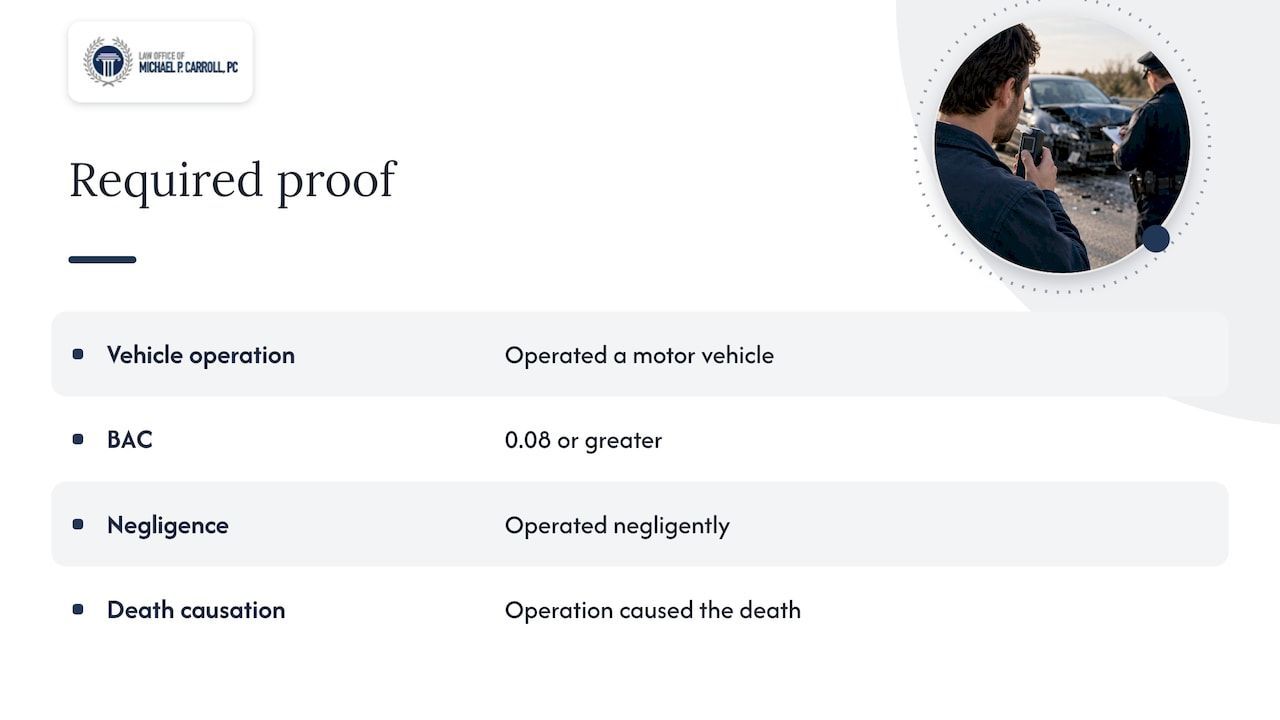
When an OUI crash kills someone, the Commonwealth can charge motor vehicle homicide under G.L. c. 90, § 24G, or manslaughter by motor vehicle under G.L. c. 265, § 13½. Under the model jury instruction for § 24G(a), the Commonwealth must prove beyond a reasonable doubt that you operated a motor vehicle, with a BAC of 0.08 or greater, and that you did so negligently. Several other elements must also be proven, including that your operation caused the death.
These are felony charges that carry mandatory minimum sentencing. As with § 24L, they cannot be resolved with a CWOF or placed on file. The SJC has also addressed how the statutes for OUI-related offenses beyond simple OUI work, in Commonwealth v. Zucchino, which is the kind of legal question a defense lawyer will research in a serious injury or fatality case.
If you are under investigation after a fatal crash, even before charges, do not give a statement without counsel. Early decisions about blood draws, statements and medical records can matter more than anything done later.
The RMV case: a separate fight over your license
Most drivers do not expect this part. Massachusetts treats the criminal case and the license case as two proceedings. The RMV's own guidance explains that a chemical test refusal suspension is administrative, and the outcome in criminal court does not automatically undo it.
If you refused the breath test
For drivers over 21, the Mass.gov page lists these refusal suspensions:
| Your history | Refusal suspension |
|---|---|
| First offense | 180 days |
| One prior OUI | 3 years |
| Two priors | 5 years |
| Three or more priors | Lifetime |
For drivers under 21, the RMV's under-21 page sets out a separate and longer scheme, and our article on underage OUI and the 180 day suspension risk walks through it.
Refusal suspensions and suspensions that follow a conviction can stack. If you refuse and are later convicted, you may have to serve both periods back to back before you can be considered for reinstatement.
The 15-day window
You have a short deadline to challenge a refusal suspension. 540 CMR 11.00 provides an opportunity for a hearing within 15 days of the date of the suspension. These hearings are narrow. According to the RMV's description of suspension hearing types, they are limited to issues such as whether the officer had reasonable grounds, whether you were arrested, and whether you refused. Arguments about how you were driving or the condition of your car will not be considered there.
Because the hearing is so limited, preparation matters. Our guides on breathalyzer refusal in Massachusetts and implied consent explain what the officer must show.
Getting driving privileges back
A suspension ending is not the same as a license coming back. The RMV requires a hearing to lift restrictions in many cases. If you have a hardship license in mind, read our walkthrough on getting a hardship license after an OUI. For multiple-offense cases, the state's Ignition Interlock Device program applies. The program stems from Melanie's Law of 2005, and removal requires its own formal process. More detail is in our piece on ignition interlock in Massachusetts.
Insurance and other costs people forget
A conviction or a responsible finding for an OUI-related crash can affect your premiums for years. The state's list of traffic law violations under the Safe Driver Insurance Plan classifies serious violations as major, which carry the heaviest surcharge points. Ask your insurer and your lawyer how a plea or a finding would be recorded before you agree to one.
Other costs to budget for include:
- Court-ordered alcohol education or treatment programs.
- Reinstatement and hardship license fees, and the cost of an interlock device where it applies.
- Lost work if you drive for a living. Commercial drivers should raise their CDL status at the first meeting, since a job can be at stake in a way a private driver's is not.
- Civil claims by injured people, which are independent of the criminal outcome.
Our perspective
We see the same pattern with people who call after an OUI crash. They arrive focused on the court date and are surprised by the RMV deadline, the insurance letter and the civil claim. Our view is that these cases are won or lost on early, organized work, not on a dramatic moment in the courtroom.
That means getting the police report, the video and the medical information quickly, calendaring the 15-day RMV window the day we are retained, and being honest with you about the range of outcomes. Because this is an owner-operated firm, you work directly with Michael, not a rotating group of staff. You hear a straight assessment from the lawyer who will stand next to you in court, and you can reach the person making the decisions.
We also tell clients what we cannot promise. A crash with serious injury is a hard case, and the statute limits what any lawyer can negotiate. What we can do is test every element the Commonwealth has to prove and keep the license, insurance and civil pieces moving in the right direction alongside the criminal case.
— Michael Carroll
What to do in the first 72 hours
- Write down the RMV deadline. If you refused a breath test, the 15-day clock started at the refusal. Do not assume the court will handle it.
- Stop discussing the crash. Do not talk to the other driver's insurer, investigators or on social media. Anything you say can be used later.
- Preserve evidence. Photograph your car and the scene if you can, save your own medical records, and note the names of any witnesses.
- Get your medical care documented. Your own injuries and the timing of any blood or breath testing can be relevant.
- Do not guess at the charges. The complaint or the clerk's notice shows what you are actually charged with. Bring it to your lawyer.
- Contact a defense lawyer before your arraignment or any clerk magistrate hearing if you can.
Talk to us about your case
If you or a family member is facing an OUI charge after an accident in Attleboro, Bristol County, Norfolk County or nearby, we can review the police report, the RMV deadline and your realistic options. Learn more about our OUI defense work, or visit our criminal defense page if the case involves other charges as well.
FAQ
What is the penalty for an OUI that causes a serious injury in Massachusetts?
Under G.L. c. 90, § 24L, the sentence is either 2½ to 10 years in state prison or six months to 2½ years in a house of correction, with a fine of up to $5,000. The sentence cannot be suspended below six months, and the case cannot be continued without a finding.
Is an OUI accident automatically a felony?
No. A crash with property damage only is typically charged as a standard OUI. The felony-level statutes come into play when the crash causes serious bodily injury or death, or when other aggravating facts are alleged. The exact charge depends on the complaint, so it is worth reading it closely with a lawyer.
Does winning my criminal case get my license back?
Not automatically. The RMV's refusal suspension is administrative, and a not guilty verdict in court does not reverse it. You need to use the RMV hearing process, which has a 15-day window for refusal suspensions.
What if a child was in the car?
G.L. c. 90, § 24V adds separate penalties when the passenger is under 14. For a first offense they include a mandatory minimum of 90 days and fines of $1,000 to $5,000. This is in addition to the OUI charge itself.
Can I take a plea to a lesser charge after a crash?
Sometimes, depending on the facts and the charge. In cases under § 24L and the homicide statutes, the law bars a continuance without a finding or placing the case on file, so the options are narrower. A lawyer who has read the evidence can tell you what is realistic.
Sources
- G.L. c. 90, § 24L, serious bodily injury while under the influence
- G.L. c. 90, § 24V, child endangerment while operating under the influence
- Model jury instruction 5.150, motor vehicle homicide under § 24G(a)
- Alcohol and drug suspensions for over 21 years of age, Mass.gov
- Alcohol and drug suspensions for under 21 years of age, Mass.gov
- 540 CMR 11.00, license suspensions and hearings
- Types of Massachusetts RMV suspension hearings
- Ignition Interlock Device Program, Mass.gov
- List of traffic law violations, Safe Driver Insurance Plan
Recommended
This article is general information about Massachusetts law, not legal advice, and reading it does not make you a client of the Law Office of Michael P. Carroll, PC. Every case is different. If you are facing charges in Bristol, Norfolk or Plymouth County, call Mike to discuss your situation.