
Breathalyzer Refusal in MA: Penalties and Your Rights
Breathalyzer Refusal in MA: Penalties and Your Rights
TL;DR:
- Refusing a breathalyzer in Massachusetts results in an immediate license suspension, lasting from 180 days to a lifetime ban depending on prior offenses. The suspension is automatic, with no temporary license issued, and challenging it requires a limited administrative hearing within 15 days. Refusal evidence is inadmissible in court, but the suspension proceeds independently of any criminal OUI case.
What happens when you refuse a breathalyzer in Massachusetts?
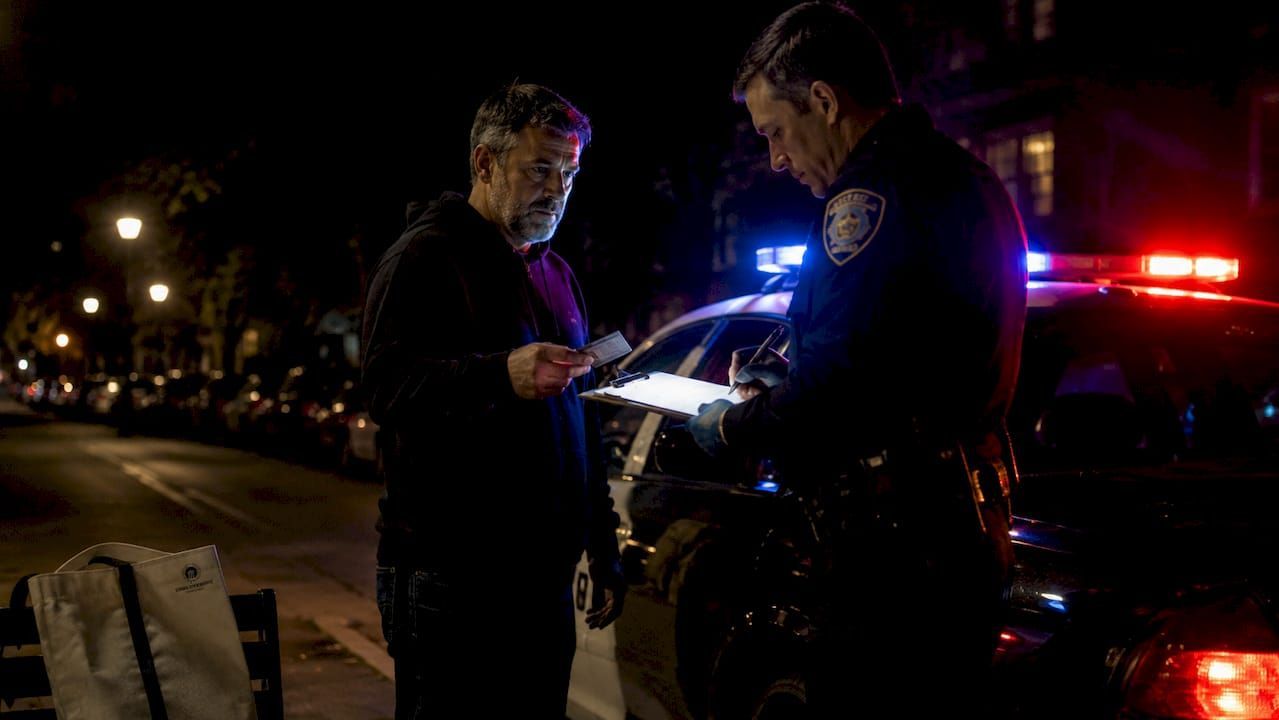
Refusing a breathalyzer in Massachusetts triggers an immediate administrative license suspension, separate from any criminal OUI charge. The length of that suspension depends on your age and your prior OUI history, and it kicks in the moment you refuse, with no grace period.
Under Massachusetts implied consent law, every driver who operates a vehicle on a public way is deemed to have consented to a chemical test if arrested for OUI. Refusing does not mean you avoid consequences. It means you trade a potential BAC reading for a guaranteed license suspension.
Here is what the suspension periods look like based on prior offenses:
- No prior offenses, age 21 or older: 180-day suspension
- No prior offenses, under age 21: 3-year suspension
- One prior OUI offense: 3-year suspension
- Two prior OUI offenses: 5-year suspension
- Three or more prior OUI offenses: lifetime suspension
Two things happen at the scene immediately. The officer confiscates your license on the spot and provides written notice of suspension. There is no temporary license issued. If multiple alcohol-related suspensions apply, they run consecutively, not concurrently, which can stack total suspension time considerably.
Pro Tip: Drivers under 21 face an additional Youth Alcohol Program (YAP) suspension on top of the refusal suspension, which runs after the initial penalty is served.
How does the RMV hearing process work for a refusal suspension?
You have the right to challenge a refusal suspension before the Massachusetts Registry of Motor Vehicles, but the window is narrow and the scope is limited.

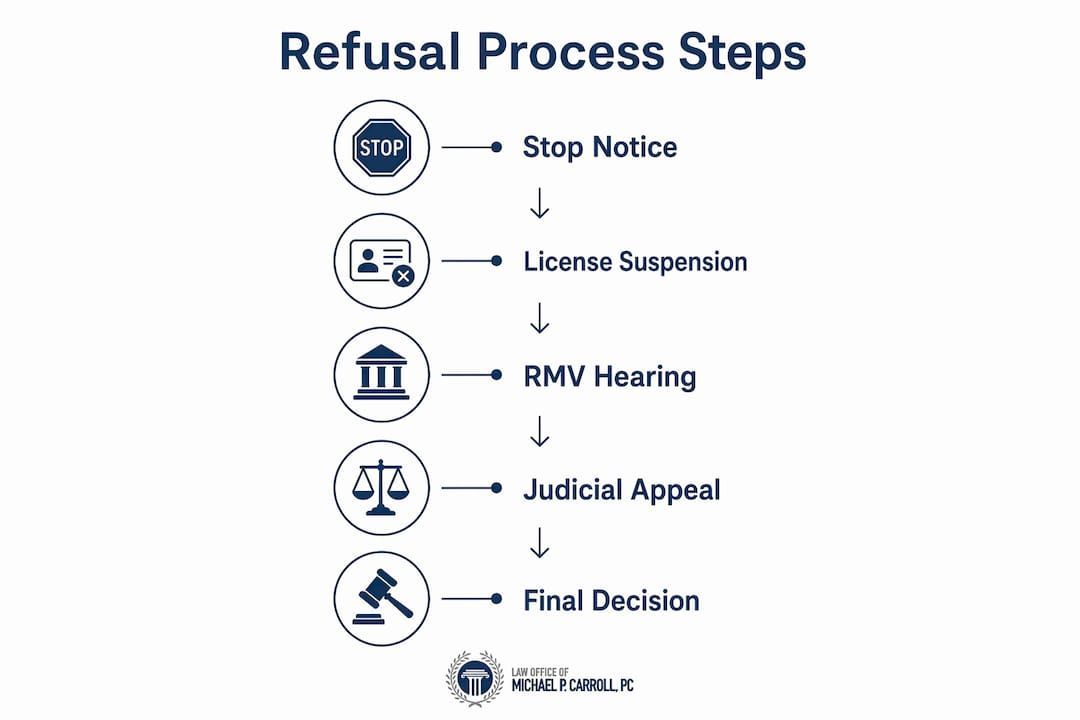
The RMV hearing must be requested within 15 days of the refusal. Miss that deadline and you forfeit your right to challenge the suspension at the administrative level entirely. Hearings are conducted only at the Boston Haymarket RMV Service Center, between 9 AM and 3 PM, on a walk-in basis. You may bring witnesses, documents, and any other evidence you want considered.
Only three factual issues can be contested at this hearing:
- Did the officer have reasonable grounds to believe you were operating under the influence?
- Were you actually placed under arrest?
- Did you actually refuse the chemical test?
If you can establish that any one of those three issues resolves in your favor, the RMV will rescind the suspension. The hearing does not touch the underlying OUI criminal charge at all. That is a separate proceeding entirely.
The officer's sworn refusal report, filed within 24 hours of the stop, serves as prima facie evidence at the hearing. That means the burden shifts to you to disprove one of those three issues. Coming in without legal preparation rarely goes well.
What are your legal rights after refusing a breathalyzer in Massachusetts?
Refusing a chemical test is not a criminal offense in Massachusetts. It is a statutory act that carries administrative consequences. That distinction matters practically: the refusal itself cannot be used against you in a criminal OUI trial.
Under Massachusetts General Laws Chapter 90 Section 24, refusal evidence is inadmissible in the criminal case. Prosecutors cannot stand up in court and tell the jury you refused because you knew you were drunk. The administrative suspension, however, proceeds independently regardless of how the criminal case resolves. Even a not-guilty verdict on the OUI charge does not automatically reinstate your license after a refusal suspension.
After a refusal, the officer is required to:
- Confiscate your Massachusetts license immediately
- Provide written suspension notice, effective immediately
- Impound your vehicle for 12 hours
- File a sworn refusal report with the RMV within 24 hours
One restriction that catches people off guard: no hardship license is available during a refusal suspension. You cannot get a work or medical exception license to drive during this period. You serve the full suspension or you win on appeal.
Blood and urine test refusals follow the same administrative framework, with one difference: a blood test is only implied-consented if you were brought to a licensed medical facility for treatment. Refusing a blood test in that specific context carries the same suspension penalties as refusing a breath test.
How do you appeal a breathalyzer refusal suspension in Massachusetts?
The appeal process runs in two stages, each with a hard deadline.
- Request an RMV hearing within 15 days of the suspension notification. This is the administrative challenge described above, limited to the three factual issues.
- File a petition for judicial review within 30 days of the RMV's decision if the hearing goes against you. This petition is filed in the district court where the underlying OUI charges are pending, as a separate civil case.
At the judicial review stage, the district court can reverse the RMV's decision if the Registry exceeded its authority, made a legal error, acted arbitrarily, or reached a conclusion unsupported by the evidence. That is a broader scope than the RMV hearing, but it still does not retry the OUI charge.
Missing the 15-day appeal window forfeits your right to challenge the suspension administratively. At that point, you are serving the full suspension unless a court later orders reinstatement based on the OUI outcome. Getting an attorney involved within the first few days of a refusal is the only reliable way to preserve both appeal options.
Expert legal insights for navigating a refusal case in Massachusetts
The RMV hearing is narrow by design. A hearings officer is not there to weigh whether you were actually impaired. The only question is whether the officer followed proper procedure and whether you refused. That narrow scope is actually an opportunity, because procedural deficiencies in the officer's sworn report can be enough to win reinstatement.
Officers must file their refusal report within 24 hours, under penalty of perjury, and it must meet specific statutory requirements. If the report is deficient or the officer lacked documented reasonable grounds, a skilled attorney can move to have the suspension rescinded at the hearing stage before the case ever reaches a judge.
Pro Tip: Request your RMV hearing immediately after a refusal, even before you have fully decided on legal strategy. You can always waive the hearing later, but you cannot recover a missed 15-day deadline.
The Law Office of Michael P Carroll has handled OUI and refusal cases across Bristol, Norfolk, and Plymouth Counties for over a decade. Michael Carroll works directly with each client, which means you get a clear picture of your specific suspension timeline, your hearing options, and how the refusal interacts with any pending OUI charge. If you are facing a refusal suspension and need an experienced OUI attorney, acting within the first 48 hours gives you the most options.
For dedicated defense on breathalyzer refusal and related OUI charges, contact the Law Office of Michael P Carroll to discuss your case directly with Michael.
Key Takeaways
Refusing a breathalyzer in Massachusetts triggers an immediate license suspension that runs independently of any criminal OUI charge, with no hardship license available during the suspension period.
| Point | Details |
|---|---|
| Suspension is immediate | The RMV suspends your license the moment you refuse, with no notification period or temporary license. |
| Suspension length varies | No prior offenses: 180 days (21+) or 3 years (under 21); one prior: 3 years; two priors: 5 years; three or more: lifetime. |
| 15-day appeal deadline | You must request an RMV hearing within 15 days of the refusal or lose the right to challenge the suspension administratively. |
| Refusal is not criminal evidence | Refusal evidence is generally inadmissible in a criminal OUI trial, but the administrative suspension still applies independently. |
| No hardship license available | Drivers suspended for refusal cannot obtain a work or medical exception license until the suspension is served or overturned. |
FAQ
What happens if you refuse a breathalyzer in Massachusetts?
Your license is suspended immediately upon refusal, with no grace period or temporary license issued. The suspension length ranges from 180 days for a first offense (drivers 21 and older), to 3 years for under 21, 3 years for one prior, 5 years for two priors, and a lifetime ban for three or more prior OUI offenses.
Is refusing a breathalyzer worse than a DUI in Massachusetts?
It depends on your record. For a first offense, refusing avoids a BAC reading that could strengthen a criminal OUI case, but it guarantees a 180-day suspension (3 years if under 21) with no hardship license option. For drivers with prior offenses, refusal triggers a 3-year (one prior), 5-year (two priors), or lifetime (three or more priors) suspension that runs independently of any criminal outcome.
Can you still get an OUI charge if you refuse a breathalyzer in Massachusetts?
Yes. Refusing the test does not prevent criminal OUI prosecution. Officers can still charge you based on observed behavior, field sobriety tests, and other evidence. The refusal itself, however, is generally inadmissible against you at trial.
What are valid reasons someone might refuse a breathalyzer?
There is no legally recognized list of valid reasons under Massachusetts law. Some drivers refuse because they believe the test is inaccurate or because they want to avoid providing direct BAC evidence. The trade-off is an automatic administrative suspension regardless of the reason given.