
5 Steps to Protect Evidence at a Massachusetts Pretrial Conference
5 Steps to Protect Evidence at a Massachusetts Pretrial Conference
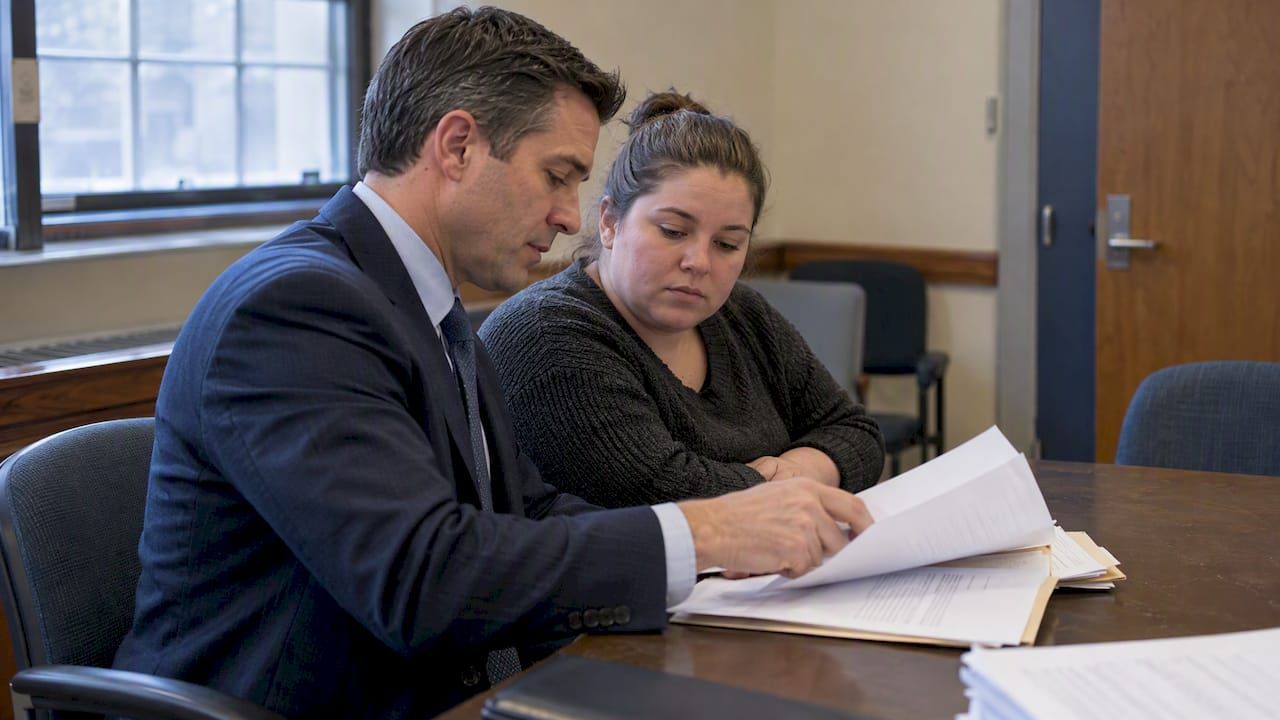
A pretrial conference in Massachusetts is a mandatory, post-arraignment case-management meeting where discovery, scheduling, and plea options are addressed. It is not a trial or sentencing hearing. You and your attorney must appear, the court will review the status of evidence exchange and motions, and any agreements you reach get written into a pretrial conference report that can bind both sides for the rest of the case.
TL;DR:
- A signed Rule 11 conference report can bind both sides for the rest of the case, so list every witness, exhibit, stipulation, and deadline.
- Missing the conference without an excuse can prompt a warrant or scheduling decisions without your input; confirm your attendance, date, and format with counsel.
- Superior Court uses three tracks, generally assigned at arraignment and confirmed at conference; ask the court to adjust an unrealistic schedule before deadlines tighten.
- Remote options vary by county, while plea changes, final conferences, and dangerousness hearings typically require in person attendance; request video in writing.
- Violating release conditions can lead to detention, while violating pretrial probation can reopen prosecution on the original charge; ask counsel which arrangement applies.
Table of Contents
- What happens at the pretrial conference
- The pretrial conference report: contents and binding effect
- Timelines and case tracks in Massachusetts Superior Court
- Virtual vs. in-person conferences: how to request a remote hearing
- Pretrial release conditions vs. pretrial probation
- How to prepare for your pretrial conference
- After the conference: what comes next
- Practitioner tips for protecting your rights at pretrial
- A note on how we approach pretrial preparation
- How we help you prepare for a Massachusetts pretrial conference
- FAQ
- Sources
What happens at the pretrial conference
The pretrial conference is a working session, not a hearing where guilt or punishment is decided. The judge or clerk-magistrate uses it to confirm that discovery has been exchanged, set dates for motions, and open the door to plea discussions if both sides want one. According to Mass.gov's explanation of the pretrial process, the conference is the court's next scheduled event after arraignment, and it shapes everything that follows.
You, your defense attorney, and the prosecutor are expected in the room (or on the screen, depending on the protocol). Probation staff or a victim witness advocate sometimes sits in when the case involves conditions of release or victim notification.
- The judge checks whether discovery has actually changed hands, not just been requested.
- Both sides propose dates for motions, hearings, and a possible trial.
- Plea discussions can start here, though no plea is entered unless you agree to it in writing.
- Missing the conference without excuse can prompt the court to issue a warrant or proceed without your input on scheduling.
Courts often use this meeting to nudge negotiations forward, since both attorneys are already present and prepared to discuss the file.
The pretrial conference report: contents and binding effect
Under Mass. R. Crim. P. 11, the prosecutor and defense counsel must attend the conference and file a written report. That report becomes the operational roadmap for the rest of the case, and its stipulations can control later proceedings unless the court allows a change for good cause.
A standard report typically includes:
- A list of agreed facts and any stipulations both sides accept.
- The witnesses and physical or documentary evidence each side plans to use.
- Proposed dates for completing discovery and filing motions.
- A proposed date for a change of plea, if one is contemplated.
- A statement on jury trial election or waiver.
One procedural rule carries real weight here: under Rule 11, a signed conference report can bind the parties for the remainder of the case. Leave a witness off the list or skip a stipulation you meant to include, and you may lose the chance to raise it later without the court's permission.
Failing to file the report, or failing to cooperate in good faith, can lead to sanctions, a case being scheduled for trial regardless of readiness, or denial of motions filed without leave of court.
Timelines and case tracks in Massachusetts Superior Court
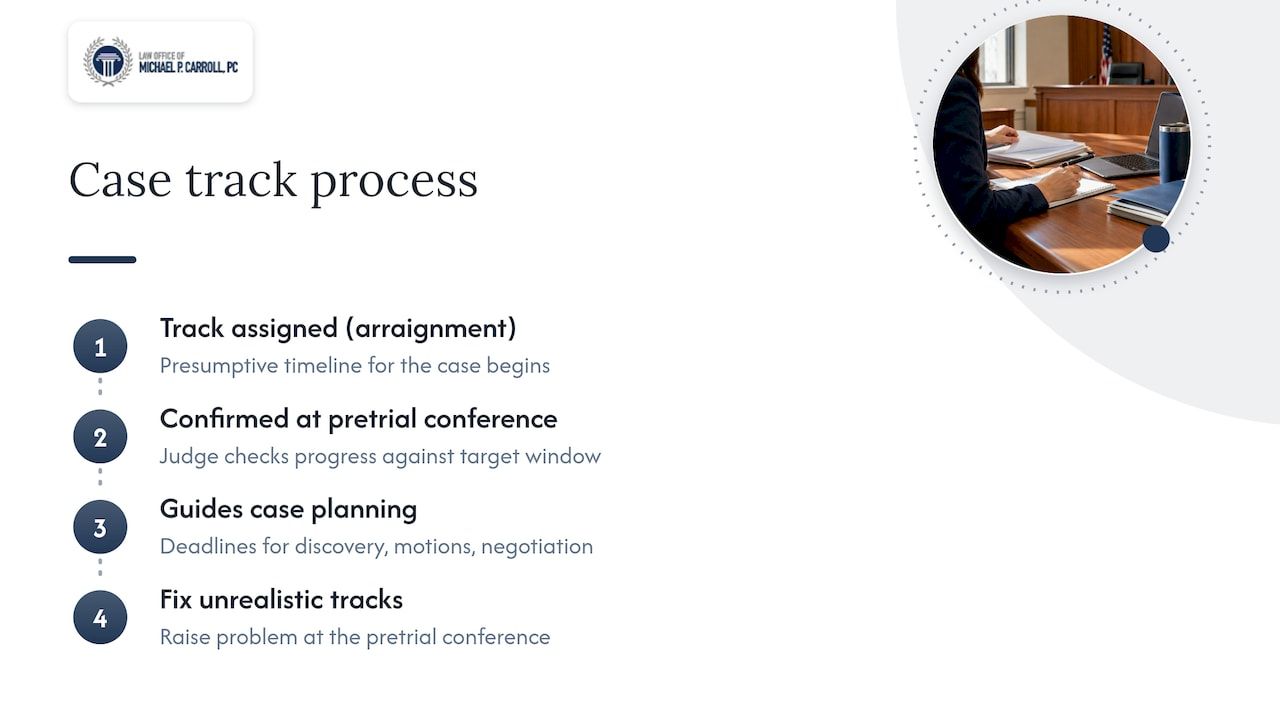
Massachusetts Superior Court assigns every criminal case to a track that sets presumptive deadlines for getting to trial. Standing Order 2-86 establishes three tracks, and knowing yours early changes how you plan motions and discovery.
Massachusetts Superior Court assigns criminal cases to different tracks that set presumptive timelines to disposition or trial readiness, ranging from shorter to longer periods depending on case complexity.
The track is typically assigned at arraignment and confirmed at the pretrial conference, where the judge checks whether the case is actually progressing within its target window. Identifying your track early matters because it dictates how much time you realistically have to investigate, file motions to suppress or dismiss, and negotiate before a trial date gets locked in. If a case has been placed on an unrealistic track given its complexity, the pretrial conference is the moment to raise that with the court.
Virtual vs. in-person conferences: how to request a remote hearing
Many Massachusetts pretrial conferences and status or scheduling events can now be conducted remotely. Guidelines for virtual and in-person criminal proceedings list which matters may be handled by video and which must stay in-person, and the answer varies somewhat by county. Changes of plea, final pretrial conferences, and dangerousness hearings typically still require your physical appearance.
- Confer with opposing counsel first to see whether both sides agree a virtual format makes sense.
- File a written motion requesting a virtual hearing, including contact information and a brief explanation.
- Serve the motion on all parties and file any related documents with the court before the hearing date.
Pro Tip: Log in at least 10 minutes early, test your audio and camera beforehand, and request an interpreter at least 72 hours ahead if you need one, per the videoconference request protocol.
Pretrial release conditions vs. pretrial probation
These two terms get confused constantly, and they are not interchangeable. Trial Court guidelines on pretrial release explain that release conditions imposed at arraignment come from different statutory sources than pretrial probation, and each carries different consequences if you violate it.
- Release conditions are set under General Laws Chapter 276, including sections 42A, 57, 58, 58A, and 58B, and the law starts from a presumption of release on personal recognizance.
- Pretrial probation operates under General Laws Chapter 276, Section 87, and functions as a conditional disposition that can lead to dismissal if you comply with its terms.
- Violating release conditions can mean revocation of release and detention; violating pretrial probation can mean the case gets reopened and prosecuted on the original charge.
- Your attorney and, where applicable, probation staff play distinct roles in monitoring and enforcing each arrangement.
Confusing the two can lead you to misjudge what happens if you slip up, so it is worth asking your attorney directly which one applies to your case.
How to prepare for your pretrial conference
Preparation determines whether the conference moves your case forward or wastes a court date. Work through this sequence before you walk into the courtroom or log into the video link.
- Confirm your attorney will attend and knows the exact date, time, and format.
- Make sure discovery has actually been exchanged and reviewed, not just requested.
- Assemble the witness and evidence list you want included in the conference report.
- Draft proposed dates for motions and a potential trial date that are realistic for your track.
- Put any plea proposal you want to discuss into writing before the conference, not during it.
On your attorney's side, effective preparation means meeting with the prosecutor beforehand, drafting the conference report entries in advance, and either filing key motions early or scheduling them clearly in the report.
Pro Tip: Never rely on an oral understanding with the prosecutor. If it is not in the signed conference report, the court may treat it as if it never happened.
The most common traps are missing the conference date outright, leaving a witness or piece of evidence out of the report, and assuming an informal agreement will hold up later.
After the conference: what comes next
Once the conference wraps up, the case moves toward either a compliance hearing or a trial assignment, depending on whether discovery and motions are on track. Rule 11 governs how the court handles gaps in compliance.
- If discovery is incomplete, the court typically sets a compliance hearing rather than moving straight to trial scheduling.
- The final pretrial conference, usually held close to the trial date, requires a joint pretrial memorandum and any motions in limine to be filed and signed.
- Continued noncompliance can bring sanctions, including exclusion of evidence or witnesses not disclosed, though you can request relief from the court for good cause.
Reviewing arraignment procedures and understanding motion practice around suppression helps you see how the pretrial stage connects to everything that came before and what follows.
Practitioner tips for protecting your rights at pretrial
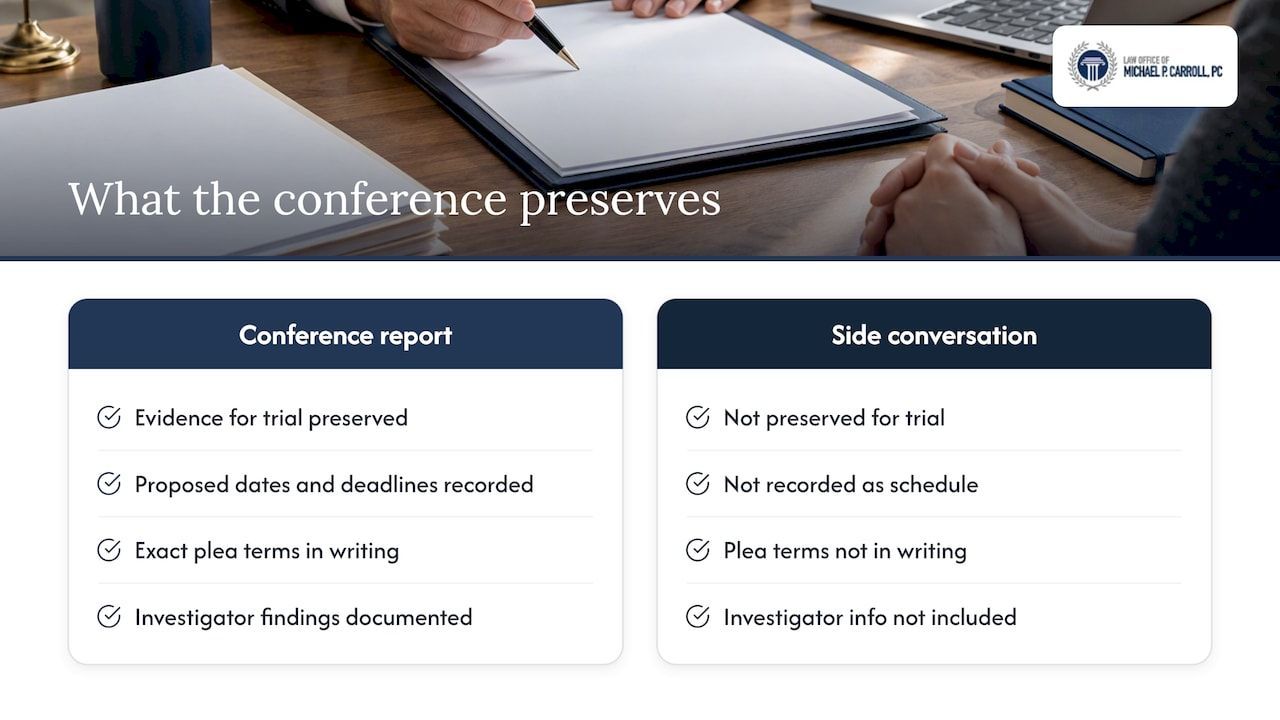
Treat the conference report as the full record of your case plan: if you want something preserved for trial, it belongs in that document, not in a side conversation. Negotiate proposed dates and deadlines with opposing counsel before the conference so you are not stuck with a schedule the court imposes by default. If a plea comes up for discussion, get the exact terms in writing and talk through the timing and consequences with your attorney before you sign anything. A private investigator, such as those offering criminal defense investigation services in Massachusetts, can also help locate witnesses or gather evidence your attorney wants documented in the report.
A note on how we approach pretrial preparation
Experience shows how often a rushed or poorly documented pretrial conference costs a client leverage later in the case. When we handle a pretrial conference for a client, they get direct access to their attorney and a conference report built to protect the facts and evidence that matter to their defense.
— Michael Carroll
How we help you prepare for a Massachusetts pretrial conference
We represent clients directly through criminal law matters, including OUI and DUI charges, restraining orders, and clerk-magistrate hearings, preparing discovery, motions, and conference report language well before your court date. Because you work with attorney Michael P. Carroll personally rather than a rotating staff, your case gets consistent attention from arraignment through trial.

If you have a pretrial conference coming up in Massachusetts, reach out through our criminal law practice page to schedule a consultation and get your case ready.
This article is general information, not a substitute for advice from a qualified lawyer. Consult a qualified legal professional about your own circumstances before acting on anything here.
FAQ
What is the point of a pretrial conference?
A pretrial conference manages the case before trial: it confirms discovery has been exchanged, sets dates for motions, and gives both sides a chance to discuss a plea. It is not where guilt or sentencing is decided, according to Mass.gov's pretrial process guidance.
Are pretrial and probation the same thing?
No. Pretrial release conditions are set under General Laws Chapter 276 and start from a presumption of release on personal recognizance, while pretrial probation under Chapter 276, Section 87 is a separate conditional disposition that can lead to dismissal upon compliance, per Trial Court pretrial release guidelines.
What are pretrial release conditions?
Pretrial release conditions are terms a judge sets at arraignment to allow you to remain free while your case is pending, drawn from statutes including General Laws Chapter 276, sections 42A, 57, 58, 58A, and 58B. Violating them can lead to revocation of release and detention, as outlined in Trial Court pretrial release guidelines.
Do you get sentenced at a pretrial conference?
No. Sentencing happens only after a plea or a trial verdict, not at the pretrial conference itself, which focuses on discovery status, scheduling, and possible plea discussions under Mass. R. Crim. P. 11.