
3 Differences in Massachusetts 258E Harassment Orders for Both Sides
3 Differences in Massachusetts 258E Harassment Orders for Both Sides
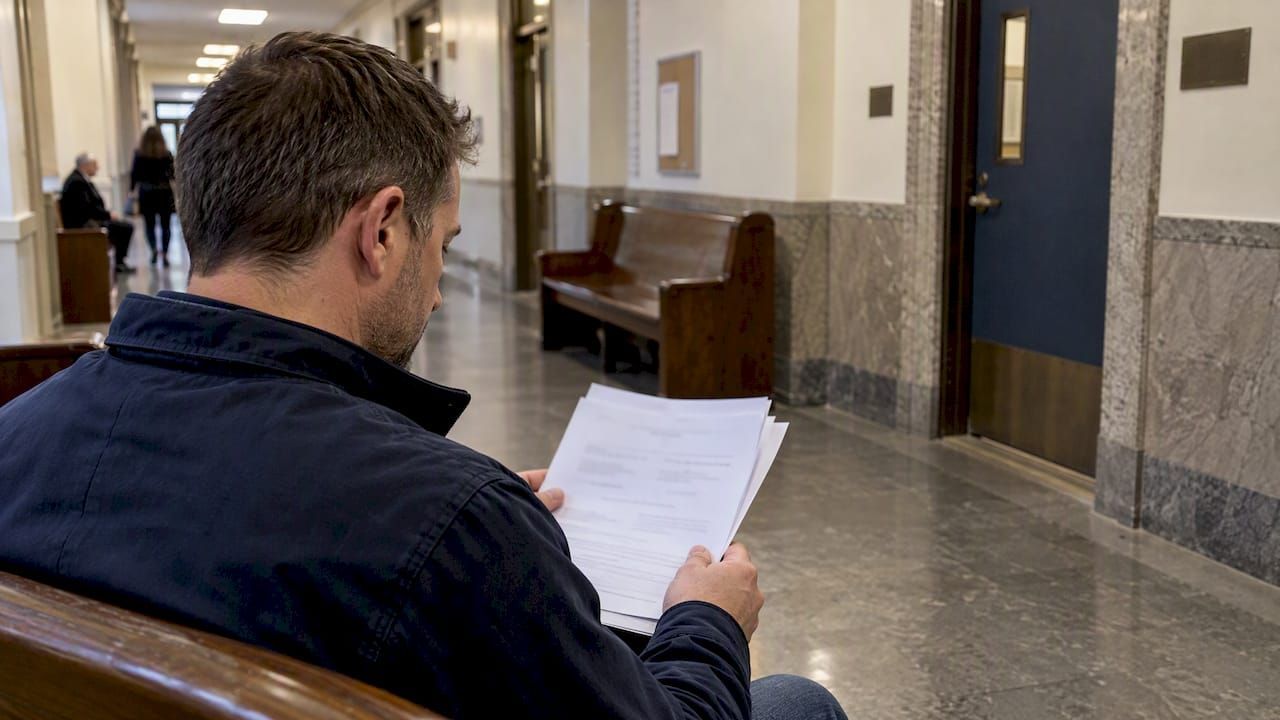
A 258E harassment prevention order is a Massachusetts civil court order that protects you from harassment, stalking, sexual assault, or criminal threats, even when you share no family or household relationship with the other person. A 209A restraining order covers family and household relationships. Official forms are available through the Trial Court and Mass.gov, and a lawyer can walk you through them.
TL;DR:
- A judge looks for repeated conduct or a serious act causing fear or real distress; preserve original messages, dated screenshots, and incident records.
- The court charges no filing fee, and service is handled through the court; if danger is immediate, request a temporary order.
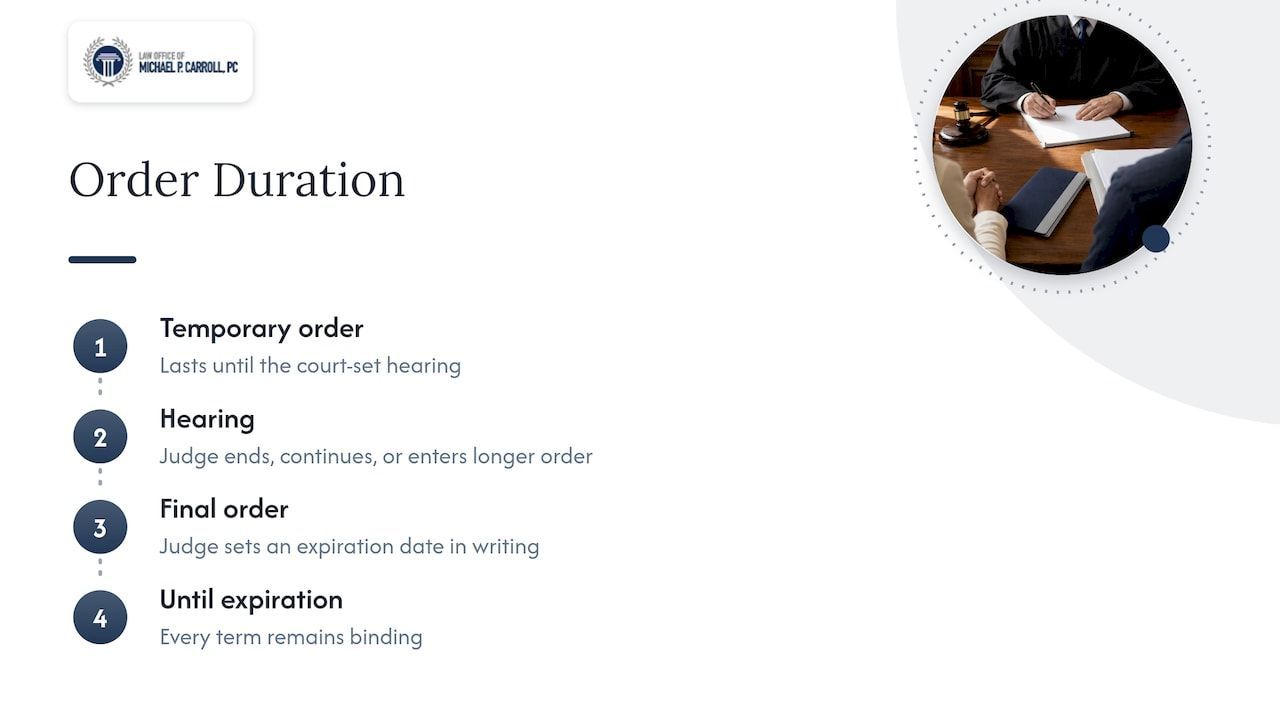
- A temporary order lasts only until the scheduled hearing, while a final order expires on the date the judge writes into it.
- If served, do not contact the petitioner directly or through others; note the hearing details, preserve evidence, and organize witnesses before court.
- Respondents must seek changes through the court, because contacting the petitioner to negotiate, even with good intentions, can violate the order.
Table of Contents
- What a 258E order is and how it differs from a 209A order
- Who can file and what conduct counts as harassment
- How to file for a 258E order: forms, clerk magistrate packet, timeline, fees, and privacy
- Hearings, enforcement, and penalties for violations
- If you are served with a 258E complaint
- How long a 258E harassment prevention order lasts
- Extensions and modifications of a 258E order
- Effects of a 258E order on custody and visitation
- Why an owner-operated defense practice matters in 258E cases
- How we help with filing or defending a 258E order
- FAQ
What a 258E order is and how it differs from a 209A order
Chapter 258E gives people a civil remedy against repeated harassment, stalking, sexual assault, and criminal threats when the other person is not a spouse, partner, relative, or household member. The aim is protection, not punishment. The statute text appears in Massachusetts General Laws Chapter 258E, and the court's plain-language explanation is on the Mass.
The practical differences from a 209A order come down to three points:
- Who may file: A 258E petitioner can be anyone targeted by qualifying conduct, while a 209A petitioner must be a family or household member or someone in a qualifying relationship with the defendant.
- Relationship requirement: 258E applies to neighbors, coworkers, acquaintances, former friends, and strangers. 209A does not.
- Typical remedies: Both can order the defendant to stay away and have no contact. Orders under 209A can also address household-related matters, such as residence and temporary custody.
If the person bothering you lives with you, is a relative, or is a current or former partner, 209A is usually the better fit. If not, 258E is typically the route to consider. Our page on restraining orders covers the 209A side in more detail.
Who can file and what conduct counts as harassment
Any person who is the target of harassment, stalking, sexual assault, or criminal threats can ask the court for a 258E order. No family or household relationship is required. The conduct generally has to be more than a single rude remark: the court looks for a pattern of acts, or a serious act such as a threat, that causes fear or real emotional distress.
Examples of conduct that can qualify include:
- Repeated unwanted texts, calls, emails, or social media messages after you asked the person to stop
- Following, watching, or showing up at your home, workplace, or school
- Coerced or forced sexual contact
- Threats of violence or other criminal acts
- Other repeated acts that would make a reasonable person afraid or seriously distressed
Evidence helps a judge understand what happened. Useful items include police reports, texts and emails, screenshots, voicemails, witness statements, medical records, and photographs. Save messages in their original form and capture the date, time, and sender on every screenshot.
Pro Tip: Keep a dated log of every incident, and back up your electronic evidence in at least two places, such as a cloud account and an external drive.
How to file for a 258E order: forms, clerk magistrate packet, timeline, fees, and privacy
The Trial Court publishes a Chapter 258E complaint packet with the complaint form and instructions. You can also start from the Mass.gov page linked above. In the complaint, you describe what happened, when it happened, and why you are afraid or distressed. Specific dates and details carry more weight than general statements.
The usual steps look like this:
- Complete the complaint form with names, addresses, and a clear account of each incident.
- File it with the clerk's office of the District Court, Boston Municipal Court, or Superior Court that serves your area.
- If you need protection right away, ask for a temporary order. A judge can issue one without the defendant present if the facts warrant it.
- Arrange for the defendant to be served with the complaint and any temporary order, usually through the sheriff or a constable.
- Attend the scheduled hearing with your evidence and any witnesses.
What to expect on timing and cost:
- A temporary order, if granted, stays in place until the hearing date, which the court sets on its own calendar.
- Courts do not charge a fee to file a harassment prevention complaint, and service is handled through the court. Confirm the current practice with the clerk's office.
- If the courthouse is closed and you face immediate danger, call 911 and ask the clerk's office about emergency filing options.
- If you are concerned about your address becoming public, ask the clerk how to request confidentiality for it and other personal details on the court record.
Hearings, enforcement, and penalties for violations
At the hearing, a judge hears testimony from the petitioner and the defendant, reviews documents, and may listen to witnesses. The petitioner must show the conduct that the statute requires. Defendants can question the petitioner's account and present their own evidence.
The judge generally has three paths:
- Issue or continue a temporary order until a further date
- Enter a final order with specific conditions, such as no contact and stay-away distances
- Dismiss the complaint if the evidence falls short
A violation of a 258E order is serious. Police can act on a report, and a violation may lead to criminal charges and contempt proceedings. Our article on restraining order violations in Massachusetts explains the penalties people face in practice.
If you are the petitioner and the order is broken:
- Call the police and report the violation right away
- Save every message, voicemail, or record of the contact
- Write down the date, time, and place of each incident
- Give your evidence to the officer and note the report number
If you are served with a 258E complaint
Being served can be alarming, but the first days matter. Take these steps in order:
- Do not contact the petitioner in any way, directly or through other people, even to apologize or explain.
- Read the papers carefully and note the hearing date, time, and courthouse.
- Preserve your own evidence: messages, calendars, receipts, photos, and anything that shows what actually happened.
- List potential witnesses and their contact information.
- Consult a lawyer promptly, before the hearing.
Common defense approaches include contesting the factual allegations, presenting evidence that contradicts them, calling witnesses, and, where appropriate, negotiating limited terms. A lawyer can tell you which approach fits your facts. Our post on same-day harassment order defense shows how fast these matters can move.
On court day, bring your documents in organized copies, dress neatly, and speak only when the judge calls on you. If you need more time to gather evidence or find counsel, ask about a continuance, but be aware that an existing temporary order may stay in place while you wait. The preparation habits in our no contact order checklist apply here too.
Pro Tip: Bring a clean timeline of events with dates, and a separate folder for each witness's contact details, so you can find anything in seconds if the judge asks.
How long a 258E harassment prevention order lasts
A temporary 258E order is short by design. It is meant to protect the petitioner until both sides can be heard, so it lasts only until the hearing date the court sets. Once the hearing happens, the judge decides whether to end the case, continue the temporary order, or enter a longer order.
When a judge enters a final order after a hearing, the order has an expiration date written into it. That date is set by the judge, based on the facts presented, and it appears on the order itself. If you are unsure when your order ends, read the paperwork carefully or ask the clerk's office to confirm the date on file. Do not rely on memory or on what the other person says.
An order does not quietly stop mattering as the end date approaches. It stays enforceable until it expires, so both sides should treat every term as binding until then. Petitioners should keep a copy of the order with them and review it before the end date to decide whether they need to ask for more time. Respondents should also track the date, but should not assume the order has ended without checking the written terms or the court record.
Because the length turns on the judge's findings, the statute text in Chapter 258E and the court's own forms are the authoritative references. If your situation is complicated, such as an order that overlaps with a criminal case, ask a lawyer to confirm how the dates work together.
Extensions and modifications of a 258E order
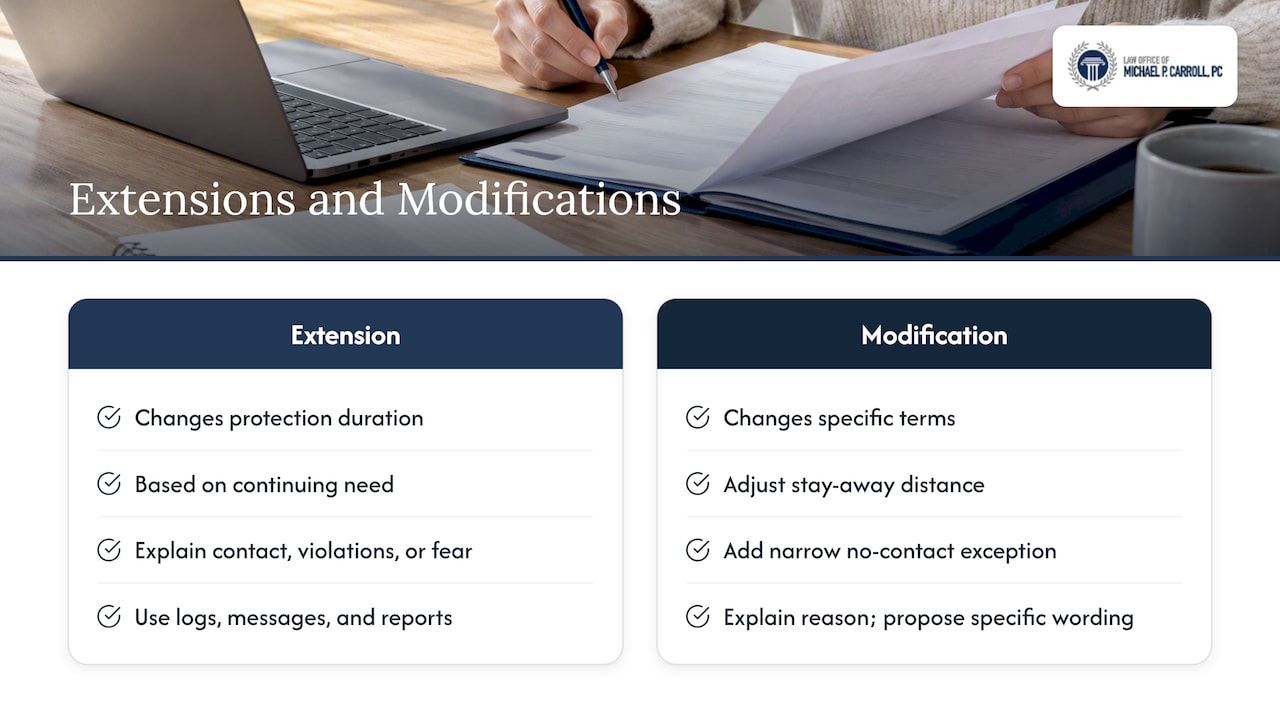
Orders are not always frozen. A petitioner who still needs protection as an order nears its end can ask the court to extend it, and either side may ask the court to change specific terms if circumstances shift. These requests are made to the court that issued the order, usually through a written motion and a hearing.
Extension requests turn on whether the protection is still needed. A petitioner should be ready to explain what has happened since the order was entered, including any contact, violations, or continuing fear. Strong records help here: the incident log, saved messages, and police reports from earlier in the case all show the court why continued protection matters.
Modifications work differently. They change the terms rather than the length. A stay-away distance might be adjusted because both people work in the same building, or a no-contact term might need a narrow exception for a practical reason. The party asking for the change should explain the reason clearly and propose specific language. A judge will weigh the request against the safety purpose of the order.
Respondents can also ask the court to modify or end an order, but they should do so only through the court. Contacting the petitioner to negotiate, even with good intentions, can be treated as a violation. If you are on either side of an extension or modification request, filing on time and presenting organized evidence makes a real difference. Our page on harassment prevention describes how we assist with these hearings.
Effects of a 258E order on custody and visitation
A 258E order is a civil protection order between two people, and it does not by itself decide custody or visitation. Custody and parenting time are handled in the family court process, under separate rules. Where the parties share children, a 209A order is the type more commonly tied to household and parenting terms, which is one reason choosing the right order matters.
Even so, a 258E order can have practical effects when parents or former partners are involved. A no-contact or stay-away term can affect how exchanges happen, where they take place, and how the two people communicate about a child. If an order is in place and a parenting arrangement also exists, both must be followed together. A parent who needs to coordinate with the other should ask the court or a lawyer how to do that safely and lawfully, rather than improvising a workaround.
Judges and family courts may also learn about a harassment order and consider it as part of the broader picture of a family's circumstances. That is another reason to take the order and any hearing seriously, whether you are the petitioner or the respondent. A finding made in one case can come up in another, so accuracy and consistency in your statements matter.
If a 258E case overlaps with a custody or visitation dispute, speak with an attorney before taking any step in either case. The right sequence and the right wording can protect both your safety and your parental rights, and each situation turns on its own facts.
Why an owner-operated defense practice matters in 258E cases
Harassment prevention matters move quickly, and the details of the first few days often shape the outcome. Michael P. Carroll takes a hands-on approach. He reviews the complaint and the evidence personally, looks for gaps and strengths in each side's account, and prepares a clear plan for court. In an owner-operated practice, you work directly with the attorney. That means a straight assessment up front, honest options, and no handoffs.
— Michael Carroll
How we help with filing or defending a 258E order
If you need to file for a 258E order or respond to one, we can help. Because we are owner-operated, you work directly with Michael P. Carroll. Our harassment prevention services include preparing the complaint, representing you at the clerk's office and at hearings, and gathering and organizing evidence. Before your first meeting, bring any orders or court papers, your messages, and your incident log. Contact us to schedule a consultation and talk through your next step.
This article is general information, not a substitute for advice from a qualified lawyer. Consult a qualified legal professional about your own circumstances before acting on anything here.
FAQ
What qualifies as harassment in Massachusetts?
Harassment under Chapter 258E generally means repeated acts, or a serious act such as a threat, aimed at a person that cause fear, intimidation, or real emotional distress. Stalking, sexual assault, and criminal threats also fall within the statute. The exact definitions are in Chapter 258E.
What evidence do you need for a harassment order?
Helpful evidence includes texts, emails, screenshots, voicemails, police reports, witness statements, medical records, and photographs. A dated log of incidents helps tie it all together. Save original files and back them up.
What happens if you violate a harassment order in Massachusetts?
A violation can lead to criminal charges and contempt proceedings. Police can act on a report from the protected person. Our guide to restraining order violations in Massachusetts explains what people face.
What behaviors are considered harassment?
Repeated unwanted messages, following or watching someone, coerced sexual contact, and threats of violence are common examples. The conduct must cause fear or serious distress, and a judge decides whether the evidence meets the statute's standard.
Recommended
This article is general information about Massachusetts law, not legal advice, and reading it does not make you a client of the Law Office of Michael P. Carroll, PC. Every case is different. If you are facing charges in Bristol, Norfolk or Plymouth County, call Mike to discuss your situation.