
Victim Witness Advocates in Massachusetts: What They Do
Victim Witness Advocates in Massachusetts: What They Do
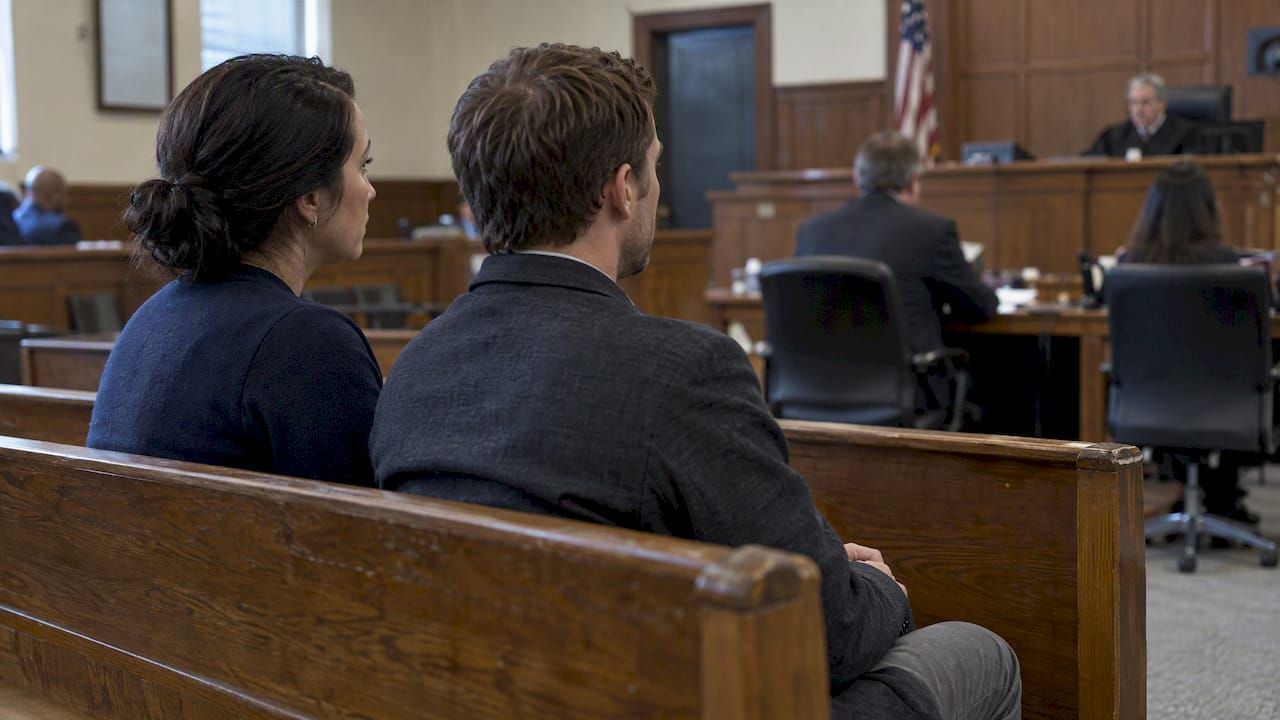
A victim witness advocate (VWA) in Massachusetts is a staff member of a District Attorney's office, or of the Attorney General's office. The advocate guides crime victims and witnesses through a criminal case. They explain the court process, give case updates, go to hearings with victims, and connect them with outside services. They work for the prosecution side, not for the victim personally, and not for the person charged. If you have been charged with a crime, you will probably hear the advocate's name in court. This guide explains what they do, what they cannot do, and how to behave around them.
TL;DR
- A VWA is employed by the District Attorney's office. They are not the victim's private lawyer, and they are not on your side if you are the defendant.
- Their services are free to victims and witnesses. They include case updates, court accompaniment, safety planning, referrals, and help with victim impact statements and restitution.
- If you are charged, never use a VWA, or anyone else, as a go-between with the alleged victim. A message passed along can become a new charge or a bail problem.
- A VWA's reports, and what the victim tells them about wishes in the case, can shape how the prosecutor handles it. Your defense lawyer should deal with that, not you.
- Call a criminal defense lawyer before you speak to anyone at the DA's office about the facts.
Table of Contents
- What a victim witness advocate is
- What advocates do for victims and witnesses
- Who the advocate works for
- Where advocates show up in a Massachusetts case
- How the advocate can affect your case
- What to do, and not do, if you are charged
- A note for victims and family members who read this
- Our perspective on advocates in defense cases
- If you are facing charges, talk to us first
- FAQ
- Sources
What a victim witness advocate is
Massachusetts has a statute for this. The Victim Bill of Rights, M.G.L. c. 258B, requires that victims and witnesses of crime be informed, present and heard at key stages of a criminal case. The same page says Victim and Witness Assistance Programs are mandated in every District Attorney's office. The advocates are the people who run those programs day to day.
The statute sets out what victims are entitled to. Section 3 of chapter 258B lists the rights of victims, witnesses and, if the victim has died, family members. Section 5 tells each district attorney to maintain a program to provide those services, to the extent reasonably possible and subject to available resources.
Advocates are placed in district, superior and juvenile courts. A job description from the Northwestern District Attorney's office describes the role as providing information, support and advocacy to victims, witnesses and their families throughout the criminal justice process. The same description says the unit also exists to aid in the prosecution of cases. Keep both halves of that description in mind. They explain almost everything about how an advocate behaves.
What advocates do for victims and witnesses
The specific services vary by county, but the core list is consistent. According to the Northwestern District Attorney's Victim & Witness Services page, advocates provide:
- notification of case status and upcoming court dates
- accompaniment to court
- safety planning
- referrals to social services and community resources
- help with victim impact statements and restitution filings
The same page says these services come at no cost to the victim or witness.
Two more points matter in practice.
Victims do not have to decide about prosecution to get help. The MOVA grants policies and procedures document says many victim services are open without reporting a crime or taking part in a prosecution. Once a victim does engage with the court process, the assigned advocate becomes their steady point of contact for updates and logistics.
Confidentiality has to be requested. The Victim Bill of Rights provides for confidentiality of contact information in the criminal justice system, but a victim must ask for it. It is not automatic, and the request goes through the prosecutor or advocate to the court for approval. If you are the defendant, this is one reason the prosecution may object when your lawyer asks for certain contact details.
Who the advocate works for
People get this wrong in both directions, so it is worth being plain.
The advocate is employed by the District Attorney's office. The state's guidebook, In the Aftermath of Crime, makes a related point about prosecutors. An Assistant District Attorney prosecutes on behalf of the Commonwealth. They are not the victim's private attorney, although they have a responsibility to consider the victim's interests. The advocate sits in the same office.
For a victim, that means the advocate is a guide and a support, not a personal lawyer. A victim who wants legal advice about their own position needs their own attorney.
For you, as the person charged, it means three things:
- The advocate is not neutral. They are kind and professional, and they are still part of the prosecution's office. Anything you say to them can reach the prosecutor.
- The advocate is not your enemy either. Most are trained, careful people doing a hard job. Treating them with courtesy costs you nothing.
- The advocate is not a channel to the other person. They will not carry your apology, your explanation or your request to drop the case, and you should not ask them to.
Where advocates show up in a Massachusetts case
The advocate's presence tracks the stages of the case. Here is how it typically looks from the defendant's side.
At the start: clerk magistrate hearings and arraignment
In some cases a person is summoned to a clerk magistrate hearing before any criminal complaint issues. The question there is whether probable cause exists to issue the complaint. If you got a notice, read our page on clerk magistrate, probable cause and notice of hearing matters. A complaining witness may attend, and an advocate may be present to support them. These are early moments when a lawyer can make a difference.
At arraignment, the judge decides bail and conditions of release. In domestic cases the conditions often include a no-contact or stay-away order. If someone you love has been arrested, the practical question of release comes first, and domestic violence bail options by state is a general overview of how bail works in these cases. The details differ by state, and the rules in Massachusetts are set by the court, so rely on your lawyer for what applies to your arraignment.
In protection order cases
A person who is a victim of domestic violence can seek a 209A abuse prevention order or a 258E harassment prevention order. Per Mass.gov's protection order process page, these are available through any district, superior, or probate and family court. Emergency orders are available through local police departments outside normal court hours. In-person court hours for orders run from 8:30 a.m. to 4:30 p.m. on business days.
In some counties, advocates help people seek these orders. Mass.gov's page on restraining orders for victims of domestic violence says that Victim Witness Advocates of the Essex District Attorney's Office are available in all eight district courts to assist victims of domestic violence. They work with local domestic violence agencies. Coverage differs by county, so do not assume the same setup in Bristol, Plymouth or Norfolk County.
If you have been served, the next days matter. Read what to do after you are given a 209A restraining order. If the order is a harassment prevention order, see our page on harassment order defense.
Through pretrial hearings and trial
The advocate keeps the victim informed of continuances and cancellations, helps arrange the victim's attendance if they are a witness, and sits with them in the courtroom. You may see them in the gallery. They are not there to testify and they are not there to argue.
The Massachusetts guidance on victim rights stresses that clear, updated communication with the assigned advocate is the best way for a victim to learn about case progress, court cancellations and their procedural rights. For you, this means the prosecution will probably know the victim's position on the case at each step.
At sentencing or disposition
Advocates help victims prepare impact statements and restitution requests. If you are convicted or admit to sufficient facts, the judge may hear from the victim. Your lawyer should know what is coming before the hearing and should prepare a response.
How the advocate can affect your case
We will be careful here. An advocate does not decide your case. The prosecutor and the judge do. But an advocate is the prosecutor's main line to the victim, and that matters in four ways.
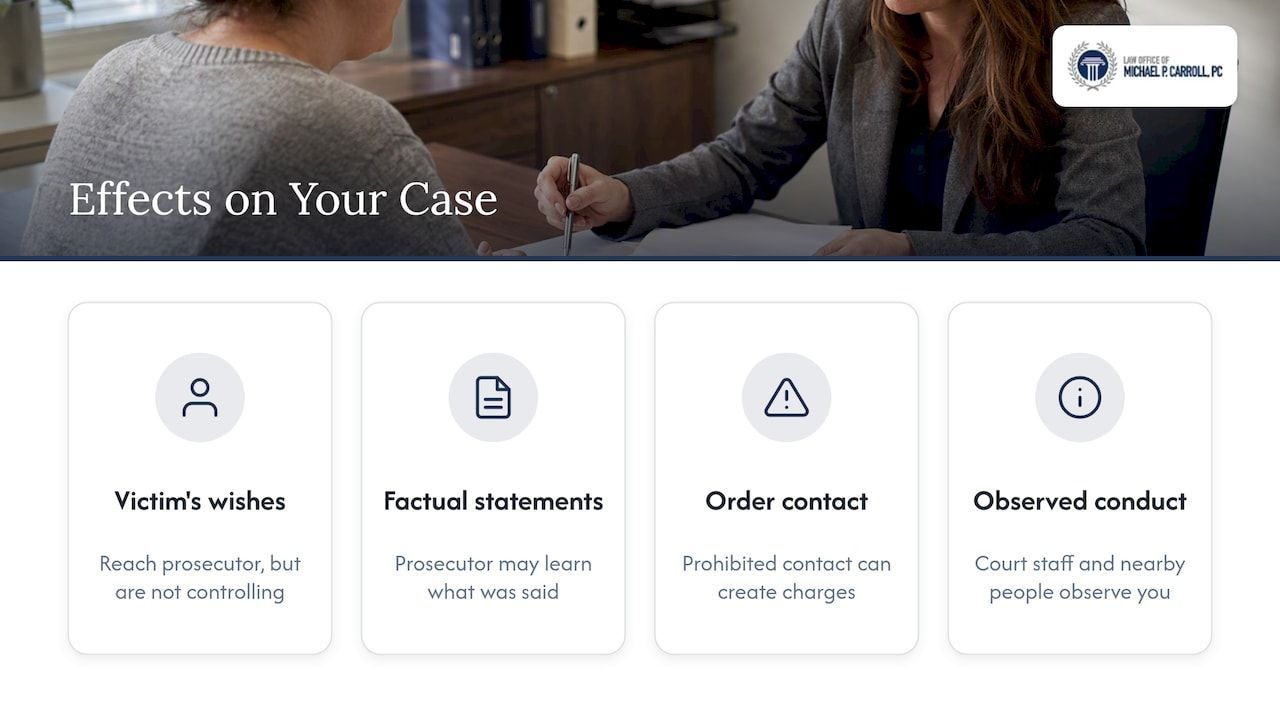
The victim's wishes reach the prosecutor. A victim may tell the advocate they want the case to end, want a no-contact order lifted, or want the case to go forward. The prosecutor hears that. A victim's wishes are not controlling. The Commonwealth, not the victim, brings the charge. Our article on how domestic violence charges end in Massachusetts walks through why a case does not simply stop when a complaining witness changes their mind.
Statements to an advocate may be shared. If a victim or witness says something to the advocate about the facts, the prosecutor may learn of it. Whether and how such information must be disclosed to the defense is a legal question for your lawyer, and the answer depends on what was said and how it was recorded.
Contact can create new charges. If a no-contact or restraining order is in place, any contact with the protected person, direct or through someone else, can be a violation. See restraining order violation penalties in Massachusetts and our no-contact order checklist. The advocate is not a loophole.
Your conduct is observed. How you act in the hallway, on the phone and in the courtroom is seen by court staff and the people near the victim. Stay calm and quiet, and let your lawyer talk.
What to do, and not do, if you are charged
Do
- Hire counsel before talking to anyone at the DA's office. A lawyer can speak for you. You do not need to explain yourself to an advocate or an investigator.
- Write down every condition of release. Stay-away distances, no-contact terms, GPS, surrender of firearms, and check-in rules vary by case. Keep the paperwork on you.
- Route all contact through your lawyer. If something about the case truly needs to be communicated to the victim or the advocate, your attorney decides how.
- Tell your family the rules. Parents, a spouse's relatives and friends often do harm by reaching out to the complaining witness with good intentions.
- Understand the firearm consequences. Some orders and charges lead to loss of licenses or firearms. Read about domestic violence penalties and gun rights in Massachusetts.
Do not
- Ask an advocate to carry a message, an apology or a request to drop the case.
- Contact the victim through social media, mutual friends or a third party.
- Argue with an advocate about what happened. They are not the decision maker, and what you say may be passed on.
- Assume that a victim's change of heart ends the case.
- Ignore a summons or a hearing notice because the other person seems to have moved on.
A note for victims and family members who read this
Some readers of this page are on the other side of the case, and they deserve accurate information too. A victim or witness can contact the District Attorney's office for their county and ask for the Victim Witness unit. The state's Massachusetts Office for Victim Assistance lists a Boston office phone number of (617) 586-1340 and an AskMOVA site for local resources. MOVA is an independent state agency governed by the Victim and Witness Assistance Board.
Support for a victim does not depend on a decision to prosecute. The Suffolk County District Attorney's domestic violence unit says victims do not need to be ready to report or prosecute to get crisis support, safety planning and resources. Anyone in immediate danger should call 911.
We represent people accused of crimes, not complainants. A victim who wants legal advice about their own rights should speak with a separate attorney.
Our perspective on advocates in defense cases
We meet victim witness advocates in court regularly, and our view is simple: they are part of the process, and a defendant does best when they respect that and say nothing.
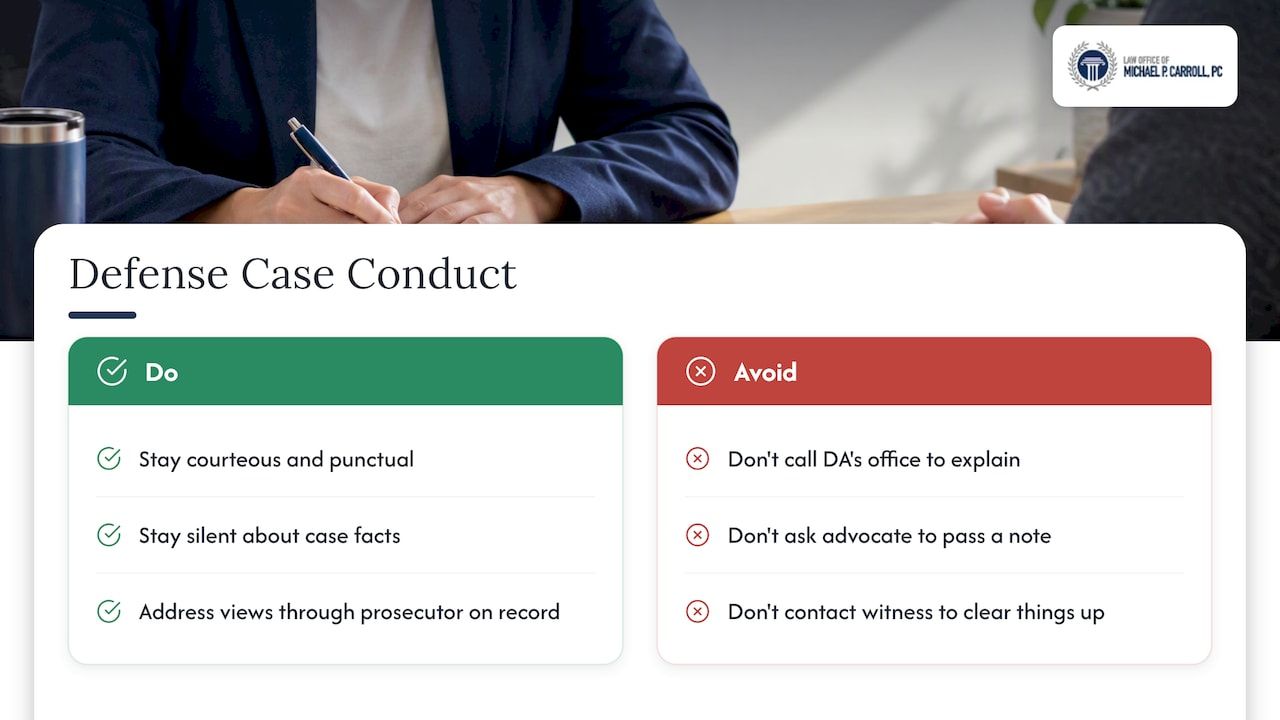
The mistakes we see are rarely malicious. A frightened person calls the DA's office to explain. A spouse who wants to make things right asks the advocate to pass along a note. A parent tries to "clear things up" with the complaining witness. Each time, the intent is good, and each time the contact can hand the prosecution something it did not have. At the Law Office of Michael P. Carroll, the owner handles your case personally. That lets us look closely at what the advocate's file may contain, how the complaining witness has communicated with the office, and what that means for strategy, whether the goal is a dismissal, a trial or a negotiated outcome.
We also tell clients that an advocate is a person doing a job under a statute. They are not an obstacle to be fought. Courtesy, punctuality and silence about the facts serve you better than any argument in the hallway. Where a victim's views matter to the outcome, we deal with the prosecutor directly and on the record.
— Michael Carroll
If you are facing charges, talk to us first
The Law Office of Michael P. Carroll defends clients in Attleboro and surrounding Massachusetts communities, including domestic assault and battery, 209A and 258E matters, clerk magistrate hearings and probable cause hearings. You work directly with Michael, from the first call through the last hearing. Start with our domestic assault and battery defense page or our restraining orders page, or reach us through mpclaw.legal.
FAQ
Is a victim witness advocate a lawyer?
No. A victim witness advocate is an employee of a District Attorney's office, trained to support and inform victims and witnesses. They are not the victim's private attorney, and they do not give legal advice to either side. A victim who needs a lawyer of their own must hire or be appointed one separately.
Can I talk to the victim witness advocate if I am the person charged?
You can be polite, but you should not discuss the facts or ask them to relay anything. They work for the prosecution's office, and what you say may be passed to the prosecutor. Refer them to your lawyer and let counsel handle any communication.
Does a victim witness advocate cost money?
Not for the victim or witness. Per the Northwestern District Attorney's office, the services are provided at no cost. They are funded through the District Attorney's office and the statutory victim assistance programs.
Can the victim end the case by telling the advocate they want it dropped?
Not on their own. The Commonwealth brings the charge, and the prosecutor decides how to proceed, though a victim's views are taken into account. A restraining order case works differently, because the person who got the order can ask the court to change it. Talk to your lawyer about which type of case you have.
Sources
- Victim Bill of Rights, Mass.gov
- M.G.L. c. 258B, Section 3
- M.G.L. c. 258B, Section 5
- Victim Witness Advocate job description, Northwestern District Attorney
- Victim & Witness Services, Northwestern District Attorney
- In the Aftermath of Crime guidebook, MOVA
- MOVA grants policies and procedures FY26
- Protection order process, Mass.gov
- Restraining orders for victims of domestic violence, Mass.gov
- Massachusetts Office for Victim Assistance
- Domestic violence victim services, Suffolk County District Attorney
Recommended
This article is general information about Massachusetts law, not legal advice, and reading it does not make you a client of the Law Office of Michael P. Carroll, PC. Every case is different. If you are facing charges in Bristol, Norfolk or Plymouth County, call Mike to discuss your situation.