
Avoid an Admission: Statute Backed Pretrial Probation in Massachusetts
Avoid an Admission: Statute Backed Pretrial Probation in Massachusetts
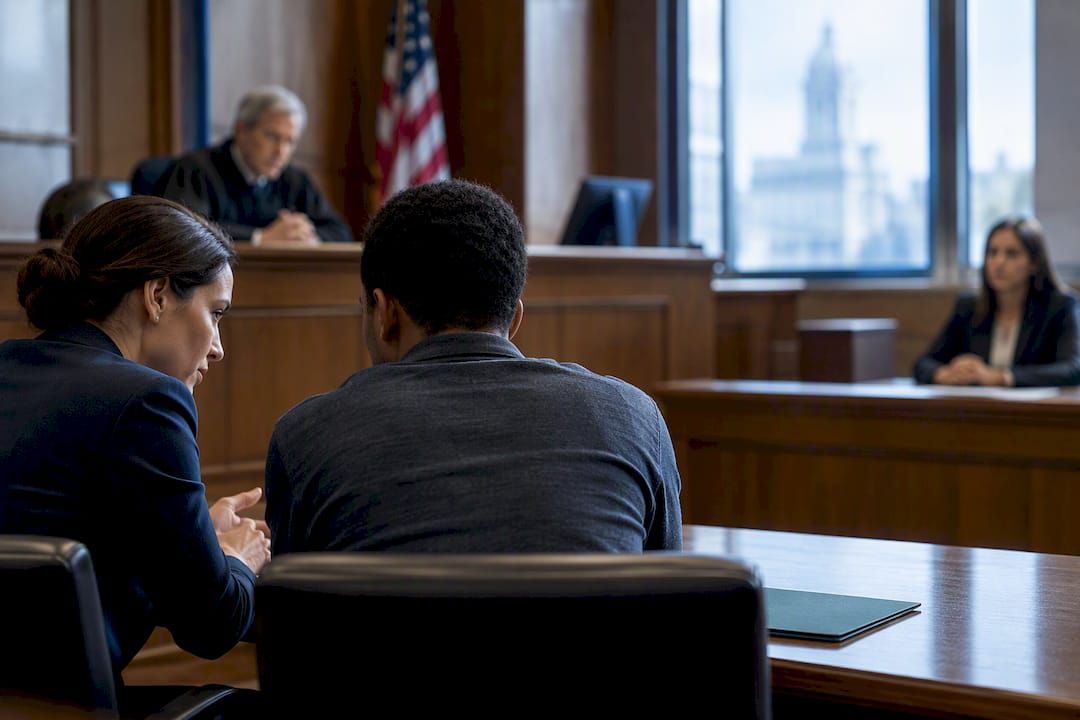
Under G.L. c.276 §87, a Massachusetts judge may place a defendant on probation before trial, but only with the defendant's consent. When used as an agreed disposition, successful completion commonly results in dismissal or removal of the case from the trial calendar. The court, not the defendant, sets the terms and the length of that period.
TL;DR:
- Massachusetts judges require defendant consent and court approval for pretrial probation, which can be used as part of a cooperative case resolution process.
- Successful completion of pretrial probation usually leads to case dismissal or removal from trial, with specific conditions like community service and supervision levels varying by case.
- The process for requesting pretrial probation involves a typical hearing where the defendant, prosecutor, and judge assess the suitability, with the prosecutor's agreement often necessary for dismissal.
- Violations of probation terms generally result in the case returning to trial, with noncriminal breaches evaluated under preponderance and criminal charges require probable cause.
- Negotiating clear, written conditions and understanding the prosecutor's stance on dismissal versus CWOF can influence the success and safety of accepting pretrial probation.
Table of Contents
- Statutory basis and how pretrial probation differs from CWOF and pretrial release
- How to request pretrial probation and who has to agree
- Typical conditions, supervision levels, and how long probation lasts
- What happens if you complete pretrial probation successfully
- What happens if you violate the terms of pretrial probation
- Should you accept pretrial probation? A practical checklist
- What clients often get wrong about pretrial probation
- How the Law Office of Michael P. Carroll can help with your case
- Authoritative statutes, guidelines, and cases worth reviewing
- Sources
- FAQ
Statutory basis and how pretrial probation differs from CWOF and pretrial release
Section 87 gives judges broad discretion to impose probation before a case is resolved, but that discretion has limits. The statute does not, by itself, guarantee a dismissal: it authorizes probation as a condition, and the dismissal outcome typically depends on an agreement among the defendant, the court, and often the prosecutor.

That distinguishes §87 from a continuance without a finding under G.L. c.278 §18, where a defendant admits to facts sufficient for a finding of guilt in exchange for a withheld finding. It also differs from ordinary pretrial conditions of release, which exist to secure appearance and public safety rather than rehabilitation. Trial Court guidelines for pretrial release draw this line clearly: conditions of release and §87 probation serve different purposes and follow different procedural paths.
Massachusetts case law, including the reasoning in Brandano and Tim T., cautions that §87 alone cannot be used to force a dismissal over the Commonwealth's objection. Courts have read the statute as a tool for cooperative resolution, not unilateral relief.
- Section 87 requires the defendant's consent and judicial approval of terms.
- CWOF under §278 §18 involves an admission to facts, not a plea of not guilty maintained throughout.
- Ordinary release conditions address appearance and safety, not rehabilitation or dismissal.
How to request pretrial probation and who has to agree
Requests for pretrial probation usually surface at a pretrial hearing, once counsel has reviewed the evidence and discussed options with the client. The process tends to follow a predictable sequence.
- Defense counsel raises the possibility of pretrial probation, often after a tendered plea or admission is discussed with the prosecutor.
- The probation department interviews the defendant to assess risk, prior record, and suitability for supervision or specific conditions.
- The defendant, the prosecutor, and the judge each weigh in: the Commonwealth's agreement is typically expected when dismissal is the eventual goal.
- The judge reviews the proposed terms, questions the defendant about the plea or admission tendered, and either accepts or rejects the arrangement.
- If the judge rejects the terms, the defendant generally retains the right to withdraw the tendered plea or admission and proceed toward trial.
District/Municipal Courts rules of criminal procedure, Rule 4 describes this pretrial hearing structure and the probation department's consultative role. A defendant weighing this path should understand what happens at arraignment and in the days after an arrest in Massachusetts, since those early steps shape what probation later recommends.
Typical conditions, supervision levels, and how long probation lasts
Conditions attached to pretrial probation vary by case, but several appear repeatedly across District and Boston Municipal Courts.
- Community service hours tied to a specific deadline.
- Restitution payments to a named victim or entity.
- Completion of anger management, substance use, or similar classes.
- Stay-away or no-contact provisions, especially in cases involving alleged victims.
- Regular check-ins with a probation officer, either in person or administratively.
Supervision can be administrative, meaning minimal contact, or supervised, meaning regular reporting to an assigned officer. Probation fees under G.L. c.276 §87A are commonly set at $60 for supervised probation and $45 for administrative probation , though a judge can waive these fees based on financial hardship. Duration varies by court and case complexity, but conditions must be specific enough to be enforceable. A vague requirement like "stay out of trouble" invites disputes later; a condition tied to a clear deadline or measurable task holds up better if a violation is alleged.
What happens if you complete pretrial probation successfully
Completing pretrial probation on the agreed terms is the entire point of accepting it. When the arrangement was negotiated as part of a dispositional agreement, successful compliance typically leads to dismissal of the charges or removal of the case from the active trial calendar.
That outcome contrasts with a continuance without a finding, which still results in an admission on record even though no conviction enters. A straight guilty plea carries the heaviest record exposure of the three.
- Pretrial probation, completed successfully, can end without any admission of guilt on record.
- CWOF avoids a conviction but still involves an admission to facts sufficient for guilt.
- A guilty plea results in a conviction regardless of the sentence imposed.
Section 87 tends to suit defendants with a triable defense who would rather avoid any admission, provided the Commonwealth is willing to agree. When the prosecutor will not cooperate with a dismissal-based approach, a CWOF often becomes the more realistic path, and counsel should weigh that trade-off honestly before advising a client either way.
What happens if you violate the terms of pretrial probation
An alleged violation does not automatically mean conviction. The District/Municipal Courts rules for probation violation proceedings make clear that pretrial violations are handled differently from violations that occur after a case has already been disposed.
- New criminal charges arising during the probationary period are evaluated under a probable cause standard.
- Noncriminal violations, such as missing a class or check-in, are evaluated under a preponderance of the evidence standard.
- The most common result of a violation is that the case returns to the active trial list rather than triggering an immediate conviction.
- Bail may be revoked under Guideline 807's bail revocation procedures, particularly for new charges or serious noncompliance, and probation officers hold limited authority to take a defendant into custody pending a hearing.
Defendants facing an alleged violation retain notice and hearing rights, and the Commonwealth must present evidence rather than rely on accusation alone. Our related guide on acting within 48 hours after a probation violation covers the immediate steps that matter most once notice is served.
Pro Tip: Ask the court to state every financial condition, including exact amounts and deadlines, out loud on the record before you accept the terms.
Should you accept pretrial probation? A practical checklist
Deciding whether to pursue or accept a §87 offer depends on more than the charge itself. Several factors typically drive the analysis.
- How strong is the Commonwealth's evidence, and how reliable are its witnesses likely to be at trial?
- Is the prosecutor willing to agree to dismissal upon completion, or only to a CWOF?
- What supervision level and fees does the probation department recommend, and can those be negotiated down?
- How specific are the proposed conditions, and would ambiguity create risk later?
- What happens to the tendered plea if the judge rejects the terms as proposed?
Negotiation levers worth raising before terms are finalized include shortening the probationary period, requesting administrative rather than supervised status, and asking for fee waivers where hardship applies. A defendant should also confirm, before tendering any plea, whether withdrawal remains available if the judge does not accept the deal as negotiated.
Pro Tip: Get the prosecutor's position on dismissal versus CWOF in writing or on the record before you tender a plea, not after.
What clients often get wrong about pretrial probation
Clients often accept vague conditions because the offer sounds favorable in the moment, then discover months later that a missed deadline or unclear payment schedule puts their bail at risk. Underestimating how quickly a court can revoke bail on a noncriminal violation is one of the most common mistakes I see.
Working directly with clients, case by case, tends to catch these gaps before they become violations. My approach is to press for specific, written terms and to confirm every financial obligation on the record at the hearing itself, since that single habit prevents most of the disputes that later land back in court.
— Michael Carroll
How the Law Office of Michael P. Carroll can help with your case
If you are weighing whether to request pretrial probation or have already been offered terms you do not fully understand, direct access to the attorney handling your case matters. At the Law Office of Michael P. Carroll, you work with Michael Carroll himself rather than being passed between staff, on cases involving criminal law, OUI, restraining orders, and related charges throughout Attleboro and the surrounding Massachusetts communities.

A consultation typically covers a review of your case, an honest assessment of whether pretrial probation is realistic given the prosecutor's stance, and a negotiation plan for the terms themselves, including supervision level and fee waivers. If you are facing an OUI charge specifically, our DUI Attorney page outlines how that process fits into pretrial negotiations. Schedule a consultation to talk through your options before you tender anything in court.
Authoritative statutes, guidelines, and cases worth reviewing
Anyone preparing for a pretrial probation hearing should read G.L. c.276 §87 directly, along with the Trial Court guidelines for pretrial release and the probation violation proceedings rules. For a plain-language comparison of release conditions versus probationary dispositions, this overview of pretrial release conditions is a useful starting point. Together these sources cover the statutory basis, procedural expectations, and violation standards defendants need before agreeing to any terms.
This article is general information, not a substitute for advice from a qualified lawyer. Consult a qualified legal professional about your own circumstances before acting on anything here.
Sources
FAQ
Are pretrial probation and regular probation the same thing?
No. Pretrial probation under G.L. c.276 §87 happens before a case is resolved and, with agreement, can lead to dismissal. Regular probation follows a conviction or a CWOF and is a sentence, not a path to avoiding one.
Is pretrial probation a good option for my case?
It depends on the strength of the evidence against you and whether the prosecutor will agree to dismissal upon completion. When those conditions align, it can let you resolve a case without an admission of guilt on record, but a judge and often the Commonwealth must consent to the arrangement.
How long does pretrial probation typically last?
Length varies by court and case, since the statute leaves the period to the judge's discretion rather than setting a fixed term. Courts generally tie the length to the conditions imposed, such as completing a class or paying restitution by a set date.
What happens if I violate a condition of pretrial probation?
The result depends on the type of violation: new criminal charges require a probable cause finding, while noncriminal violations use a preponderance of the evidence standard, according to District/Municipal Court rules. The most likely outcome is that your case returns to the trial list, though bail revocation is possible under Guideline 807 for serious violations.
Is pretrial release the same as pretrial probation?
No. Pretrial release conditions exist to ensure you appear in court and do not pose a safety risk, while pretrial probation under §87 is a rehabilitative, dispositional tool tied to a plea or admission. The Trial Court guidelines for pretrial release explain that these two mechanisms follow separate procedural paths.