
Protect Your Job After a Massachusetts Shoplifting Charge (M.G.L. §30A)
Protect Your Job After a Massachusetts Shoplifting Charge (M.G.L. §30A)

A shoplifting charge in Massachusetts hinges almost entirely on one number: the retail value of what was taken. Under M.G.L. c.266 §30A, a first offense involving goods of lower retail value carries a maximum fine at the lower statutory tier, while a charge involving goods valued at or above the higher statutory threshold exposes you to a larger fine and potential imprisonment in a house of correction. Prior offenses push both fines and jail time higher, and merchants can also pursue civil damages separately from the criminal case. Many first-time and low-value cases resolve through diversion or a continuance without a finding rather than a conviction.
TL;DR:
- Cases involving retail value under $250 generally result in fines up to $250 with no jail time, especially for first offenses.
- Higher-value shoplifting cases of $250 or more can lead to fines up to $1,000 and jail time up to two and a half years, even on first offense.
- Civil damages a store can seek are capped at $50 for values under $50, $250 for $50–$250, and $500 for over $250, regardless of the actual amount demanded.
- Probable cause for arrest can be established by store staff alone, allowing arrests without warrants, making early legal intervention crucial.
- Most cases are resolved through diversion programs or continuances without a finding, which prevent formal convictions but require compliance with conditions.
Table of Contents
- What Does Massachusetts Law Define as Shoplifting?
- How Much Jail Time and What Fines Apply to Shoplifting Penalties in Massachusetts?
- What Civil Damages Can a Massachusetts Store Demand for Shoplifting?
- Can You Be Arrested for Shoplifting Without a Warrant in Massachusetts?
- What Happens Before Trial: Diversion Programs and CWOFs
- How Do Juvenile Shoplifting Cases Differ in Massachusetts?
- How Do You Seal a Shoplifting Record in Massachusetts?
- Can You Appeal or Reduce a Shoplifting Sentence in Massachusetts?
- Why Do Repeat Offenses Cost More Than Just a Higher Fine?
- Will a Shoplifting Conviction Affect Your Job or Professional License in Massachusetts?
- What Sentencing Alternatives Exist Instead of Jail for Shoplifting?
- If You're Accused: An Attorney's Immediate Checklist and Realistic Outcomes
- How the Law Office of Michael P. Carroll PC Can Help With a Massachusetts Shoplifting Charge
- Sources
- FAQ
What Does Massachusetts Law Define as Shoplifting?
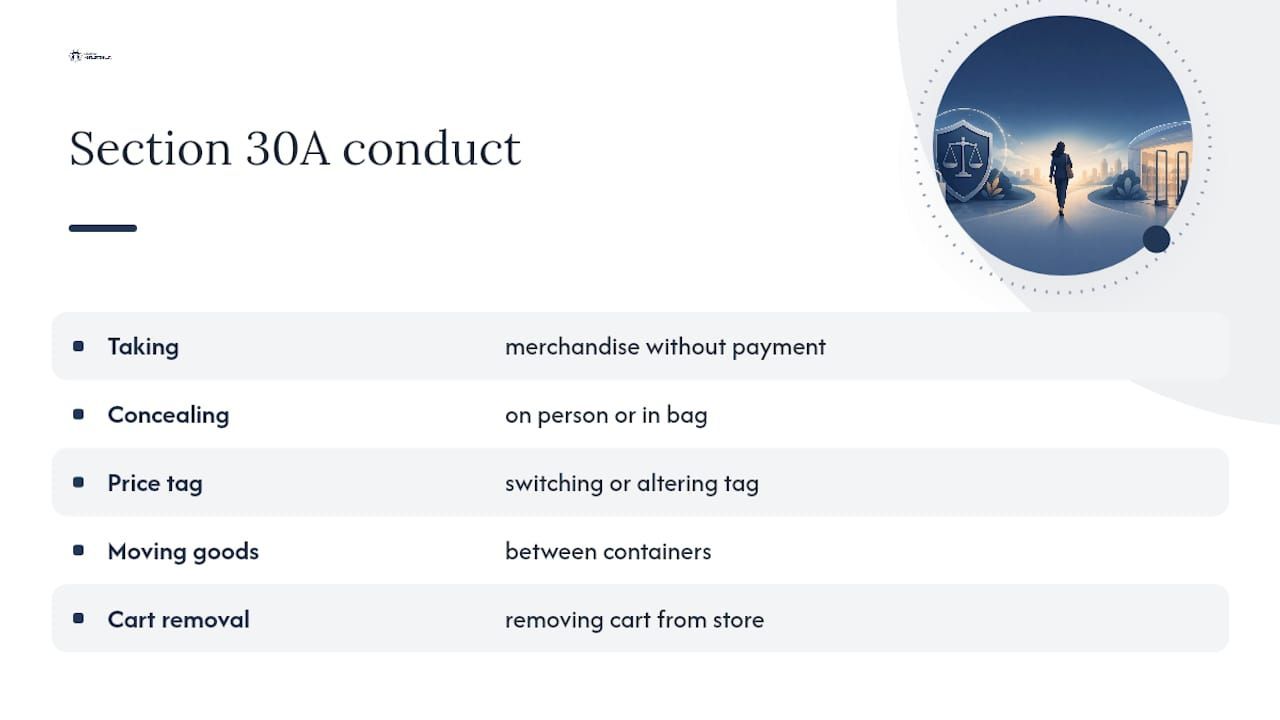
Massachusetts folds shoplifting into its general larceny framework, but Section 30A carves out a specific version aimed at retail settings. The statute covers taking merchandise without paying, concealing an item on your person or in a bag, switching or altering price tags, moving goods between containers, and removing a shopping cart from store premises without authorization.
The prosecution has to prove intent. Prosecutors must show you meant to deprive the merchant of the item's possession, use, or benefit, or that you intended to convert the property to your own use without paying full value. Absentminded mistakes, like walking out with an item on the bottom of a cart, do not automatically meet that bar, though proving what someone actually intended is often the central fight in these cases.
Section 30A generally applies when the conduct happens on retail premises and involves merchandise offered for sale. Broader theft statutes like general larceny under Chapter 266 can come into play for higher-value property crimes or conduct that falls outside a retail setting, but for most retail incidents, Section 30A is the controlling law.
How Much Jail Time and What Fines Apply to Shoplifting Penalties in Massachusetts?
Retail value under $250 and value at or above $250 trigger two entirely different penalty tracks, and prior convictions matter as much as the price tag.
For goods valued under $250:
- First offense: a fine of up to $250, with no jail exposure.
- Second offense: a fine between $100 and $500.
- Third or subsequent offense: a fine of up to $500, up to two years in jail, or both.
For goods valued at $250 or more: any offense, first or otherwise, can bring a fine of up to $1,000, up to two and a half years in a house of correction, or both, under Section 30A.
Prosecutors have some discretion here. If the value is high enough or the facts suggest planning, such as using tools to defeat security tags or working with an accomplice, a district attorney may charge under a different larceny statute entirely, which can carry heavier penalties and land the case in superior court rather than district court. District courts handle the overwhelming majority of shoplifting cases, but a felony-level larceny charge or repeat-offender enhancement can shift venue and raise the stakes considerably. Where your case lands often depends less on what you took than on how the incident is charged.
What Civil Damages Can a Massachusetts Store Demand for Shoplifting?
Getting arrested is not the only financial exposure. Under G.L. c.231 §85R1/2, merchants can send a civil demand letter seeking damages separate from any criminal case, but the law caps how much they can ask for:
- Retail value under $50: up to $50 plus actual damages.
- Retail value $50 to $250: up to $250 plus actual damages.
- Retail value over $250: up to $500 plus actual damages.
A store cannot lawfully demand more than these tiered caps, no matter how the letter is worded. If you receive one of these letters, keep the receipt, packaging, or any correspondence, and do not pay before understanding what the letter is actually entitled to collect. These demands sometimes arrive even when no criminal charge is ever filed, and paying quickly is rarely the smartest first move. Talk to counsel before responding.
Can You Be Arrested for Shoplifting Without a Warrant in Massachusetts?
Yes. A store employee's statement alone can establish probable cause for an arrest without a warrant under Section 30A, which is one reason store security detentions escalate so quickly into criminal charges.
If police do not make an arrest at the scene, the case often heads to a clerk-magistrate show-cause hearing before any formal complaint is issued. This hearing is a genuine fork in the road: the magistrate reviews surveillance footage, register receipts, and witness statements to decide whether probable cause exists to move forward. Getting an attorney involved before that hearing, rather than after, is often the single biggest factor in whether a complaint gets filed at all.
What Happens Before Trial: Diversion Programs and CWOFs
Two pretrial dispositions dominate how Massachusetts shoplifting cases actually resolve, and neither one is a conviction.
A continuance without a finding, or CWOF, lets a defendant admit to sufficient facts without the court entering a guilty finding, as described in the district court sentencing bench book. Complete probation conditions, and the case gets dismissed.
Diversion programs run through district attorneys, police departments, or clerk-magistrates offer eligible first-time offenders a path to dismissal before prosecution even formally begins. Typical conditions include restitution to the store, community service, and sometimes a short educational or counseling program. Miss those conditions, and the case can reopen for prosecution. Both dispositions can still show up on certain background checks, which is why the sealing process discussed below matters even after a case is resolved favorably.
How Do Juvenile Shoplifting Cases Differ in Massachusetts?
Juvenile cases lean heavily toward diversion rather than formal prosecution. Massachusetts distinguishes between informal diversion, often arranged directly by police or school resource officers without ever reaching court, and formal diversion referred through a clerk-magistrate or the juvenile court system.
Programs typically emphasize education and accountability over punishment, and successful completion generally avoids a juvenile record entirely. Failing to complete a program can send the case back toward formal delinquency proceedings, so following through matters as much for a teenager as it does for an adult on a CWOF.
How Do You Seal a Shoplifting Record in Massachusetts?
A dismissed case, a completed diversion program, or a CWOF does not disappear from your record automatically. You have to actively petition to seal it, and the eligibility rules and waiting periods vary depending on the disposition.
Until sealed, these records can surface on background checks run by employers, landlords, and licensing boards, which is often the most damaging long-term consequence of a shoplifting arrest, well beyond the fine itself. Filing to seal is a separate legal step from winning the case, and it's worth doing as soon as you're eligible rather than assuming a dismissal already handled it.
Can You Appeal or Reduce a Shoplifting Sentence in Massachusetts?
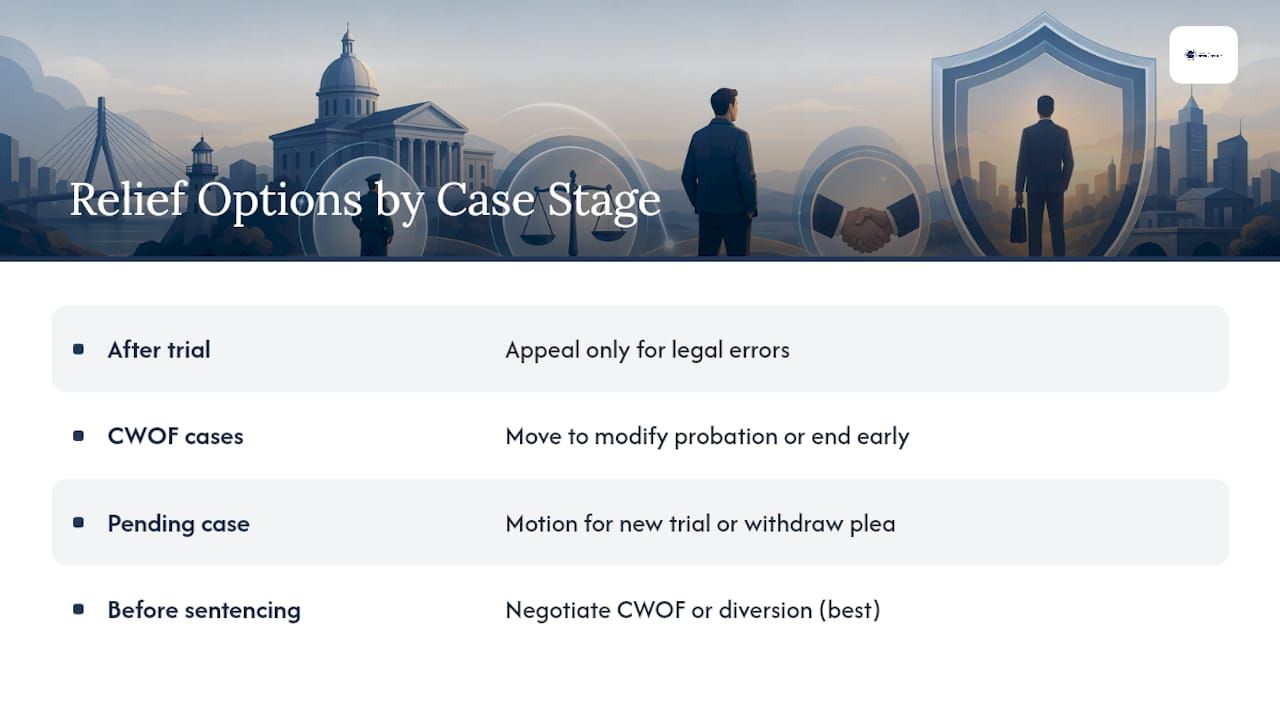
You have real options if you've already been sentenced, though the path depends heavily on how your case was resolved. A conviction after trial can generally be appealed to the Massachusetts Appeals Court, but appeals focus on legal errors, such as improperly admitted evidence or a flawed jury instruction, not simply disagreement with the verdict. Winning an appeal outright is uncommon; courts give real deference to trial-level findings.
Most practical relief happens earlier and outside the appellate process entirely. If you accepted a CWOF, filing a motion to modify probation conditions or petitioning for early termination of probation is often more realistic than a formal appeal, especially if you've complied with every condition and have a documented reason for the request. Judges retain discretion to adjust probation terms, reduce fines, or terminate supervision early when a defendant demonstrates compliance.
For cases still pending, a motion for a new trial or a motion to withdraw a guilty plea can sometimes undo a bad outcome, particularly where new evidence surfaces or where a defendant can show their plea wasn't entered knowingly. These motions have to be filed with specific procedural grounds, and courts do not grant them lightly.
Realistically, the strongest leverage almost always comes before sentencing, not after. Negotiating for a CWOF or diversion at the pretrial stage tends to produce a far better long-term outcome than trying to unwind a conviction once it's on the books.
Why Do Repeat Offenses Cost More Than Just a Higher Fine?
Retail value drives the baseline penalty, but a prior shoplifting record changes the entire calculus in ways that go beyond the fine schedule.
A second offense under $250 already jumps from a maximum $250 fine to a mandatory range of $100 to $500, and a third offense adds jail exposure that simply doesn't exist for a first-time low-value case. Beyond the statute's numbers, repeat offenses also change how prosecutors and judges treat you procedurally. A first-time offender with a clean record is a strong candidate for diversion or a CWOF; a defendant with a prior shoplifting conviction on file often loses access to those options and faces a harder push toward an actual guilty finding.
Bail conditions can tighten with each subsequent charge, too, and judges may impose stricter pretrial release conditions, including more frequent check-ins or restrictions on entering certain retail establishments. Prosecutors also weigh whether to charge under Section 30A at all or push for a different larceny statute once a pattern emerges, particularly if the retail value creeps toward felony thresholds. That charging decision can move a case out of district court entirely.
The practical lesson: the gap between a first offense and a third offense is not linear. It compounds, both in the statute's own fine structure and in how much discretion disappears from the people deciding your case.
Will a Shoplifting Conviction Affect Your Job or Professional License in Massachusetts?
A shoplifting conviction, even a minor one, can follow you well past the courtroom. Many employers run background checks as a standard part of hiring, and a theft-related offense, however small the dollar amount, tends to raise more red flags than most other misdemeanors because it touches on honesty and trustworthiness directly.
Professional licensing boards, including those overseeing nursing, teaching, real estate, and financial services, often ask applicants to disclose any criminal history, and a shoplifting conviction can trigger additional review or, in some fields, outright denial. Even where a license isn't automatically at risk, disclosure requirements alone can complicate renewals or new applications for years.
Housing applications present a similar problem. Landlords increasingly run background checks, and a theft conviction on record can be used as grounds to deny an application, regardless of how long ago it happened. Immigration consequences are another serious concern for non-citizens; a theft conviction can affect visa applications, green card renewals, or naturalization depending on the specifics of the case and how the crime is classified.
This is exactly why a CWOF or diversion outcome matters so much. Avoiding a formal conviction, even where the case doesn't disappear entirely from a background check until sealed, keeps far more doors open than a guilty finding does. The stakes of a shoplifting case are rarely just about the fine.
What Sentencing Alternatives Exist Instead of Jail for Shoplifting?
Judges in Massachusetts have real flexibility beyond the fine-and-jail framework written into the statute. Restitution, paying the store back for any unrecovered loss, is a common condition attached to both CWOFs and straight probation, and courts generally expect it before considering a case resolved.
Community service shows up frequently in diversion agreements and probation terms, particularly for first-time or low-value cases, and it's often paired with a short educational program addressing the underlying conduct. Some courts require completion of a theft-awareness or counseling program as a probation condition, especially where the facts suggest an underlying issue like substance dependency or financial hardship rather than deliberate criminal intent.
Probation itself, whether attached to a CWOF or a straight conviction, typically includes reporting requirements and can carry conditions like staying away from the specific store or retail chain involved. Judges retain discretion to combine these tools: a fine plus restitution plus a set number of community service hours is a fairly standard package for a first offense that doesn't qualify for outright diversion. Noncompliance with any of these conditions can trigger a probation violation hearing, which puts the original jail exposure back on the table. The goal across most of these alternatives is the same: resolve the financial harm to the merchant while avoiding the long-term damage to an actual conviction.
If You're Accused: An Attorney's Immediate Checklist and Realistic Outcomes
The first 48 hours after a shoplifting accusation shape most of what follows. Preserve receipts, save any photos, and write down names and contact information for witnesses while memories are fresh. Do not make statements to store security or police beyond identifying yourself. If you were not arrested at the scene, ask whether a clerk-magistrate hearing is scheduled and get an attorney involved before that date, not after.
Early counsel matters because diversion and CWOF negotiations happen fastest when a lawyer engages before a complaint issues. Realistic timelines run anywhere from a few weeks for a straightforward first-offense resolution to several months for contested cases. No attorney can promise a specific outcome, but the show-cause window is often the best chance to resolve a case before it becomes a permanent part of your record.
Pro Tip: If you haven't been arraigned yet, ask your attorney to reach out to the clerk-magistrate's office directly. Pre-complaint negotiation is almost always more flexible than anything available once a case is formally in the court system.
How the Law Office of Michael P. Carroll PC Can Help With a Massachusetts Shoplifting Charge
The Law Office of Michael P. Carroll gives you something most firms handling volume caseloads can't: direct access to the attorney actually working your case. At this firm, consultations, court dates, and negotiations with the clerk-magistrate or district attorney's office involve the same attorney rather than a rotating cast of associates who meet you for the first time at arraignment.

Shoplifting cases move fast, and the window to negotiate diversion or a CWOF before a complaint issues can close within days. The firm handles clerk-magistrate hearings and probable cause hearings, works to secure diversion or CWOF outcomes for eligible clients, and assists with petitioning to seal records once a case resolves favorably. If you've been accused of shoplifting anywhere in Attleboro or the surrounding Massachusetts area, visit the criminal defense page to schedule a consultation, review the specific facts of your case, and find out what options, whether diversion, a CWOF, or a full defense, actually fit your situation before your next court date.
This article is general information, not a substitute for advice from a qualified lawyer. Consult a qualified legal professional about your own circumstances before acting on anything here.
Sources
FAQ
What is the penalty for a first-offense shoplifting charge in Massachusetts?
For goods valued under $250, a first offense carries a fine of up to $250 with no jail exposure. If the value is $250 or more, even a first offense can bring a fine up to $1,000 and up to two and a half years in a house of correction under Section 30A.
Can you still get in trouble for shoplifting after leaving the store?
Yes. A merchant's statement alone can establish probable cause for an arrest without a warrant, and stores often pursue civil demand letters or contact police even after you've left the premises. Leaving the store does not end the store's ability to pursue criminal charges or civil damages under G.L. c.231 §85R1/2.
What happens if you're found guilty of shoplifting in Massachusetts?
A guilty finding results in the statutory fine and, depending on the retail value and prior record, possible jail time in a house of correction. Many first-time and low-value cases instead resolve through a CWOF or diversion program, avoiding a formal conviction while still requiring restitution or community service.
Do Massachusetts stores actually prosecute shoplifters?
Many retailers do pursue both criminal referrals and civil demand letters, particularly larger chains with loss-prevention staff trained to document incidents for prosecution. Whether a case moves forward to a formal complaint often depends on the clerk-magistrate's show-cause review, which is why early legal representation can meaningfully affect the outcome.
How can Law Office of Michael P Carroll help with a shoplifting charge?
The firm represents clients directly with attorney Michael P. Carroll at clerk-magistrate hearings, probable cause hearings, and diversion or CWOF negotiations. Pricing depends on the specifics of your case, and current details are available through the criminal defense page.