
5 Day RMV Rule, 3 Offenses: Leaving the Scene in Massachusetts
5 Day RMV Rule, 3 Offenses: Leaving the Scene in Massachusetts
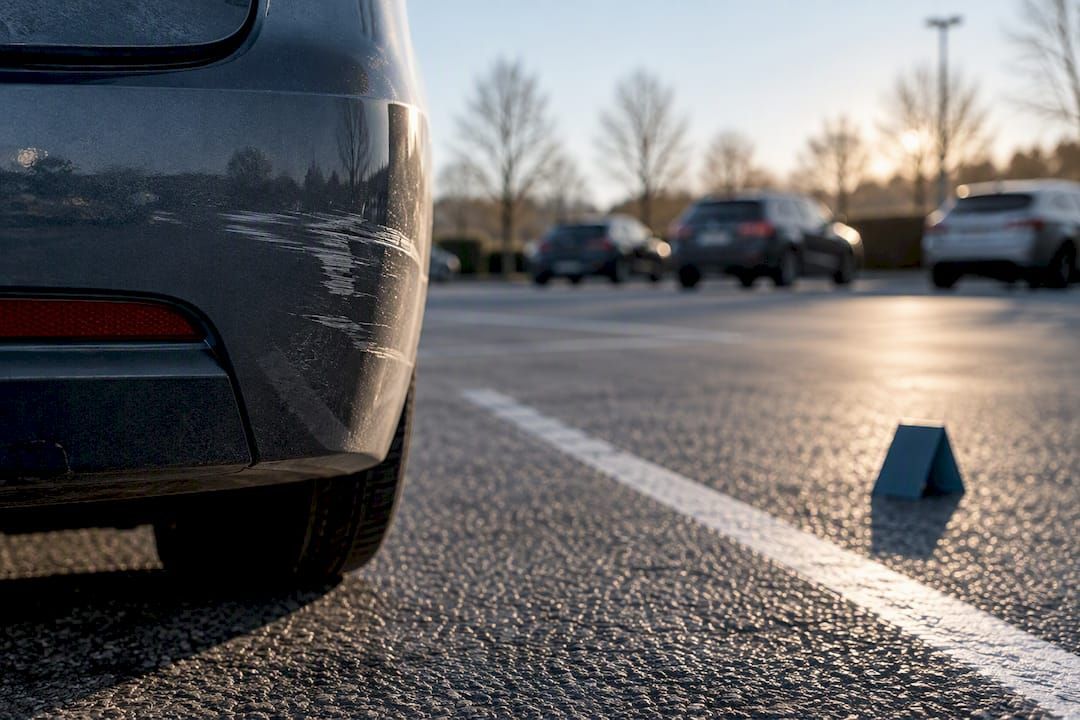
Yes, leaving the scene of a crash is a criminal offense in Massachusetts under G.L. c. 90 § 24, and the consequences scale sharply with the harm caused. Property-damage cases carry misdemeanor penalties; crashes involving injury or death can trigger mandatory jail time and felony charges. Beyond the criminal courtroom, the Registry of Motor Vehicles can suspend your license administratively, often within days. If you left a scene in Massachusetts, or you're worried you might be charged, you can seek legal advice to review the facts of your case.
TL;DR:
- Leaving a scene due to property damage, injury, or death triggers increasingly serious criminal charges, from misdemeanor to felony, regardless of fault.
- Prosecutors must prove operation, location, collision, knowledge, and failure to identify, often relying on circumstantial evidence rather than confessions.
- The mandatory minimum sentence for death-related cases is at least one year in prison, with little discretion for judges to suspend or reduce it.
- License suspension by the Registry of Motor Vehicles can occur independently of criminal charges if reporting deadlines are missed or documents are filed late.
- Prompt legal advice and thorough evidence preservation are crucial in avoiding or minimizing criminal and administrative penalties.
Table of Contents
- Leaving the Scene of a Crash in Massachusetts: The Three Offenses
- What Prosecutors Have to Prove
- Criminal Penalties and RMV Fallout
- The RMV Crash Report: Five Days, Not Three Hours
- Defenses, Costly Mistakes, and What to Do Right Now
- How Michael P. Carroll Approaches These Cases
- When to Call a Lawyer Right Away
- Talk to a Massachusetts Attorney About Your Case Today
- Sources
- FAQ
Leaving the Scene of a Crash in Massachusetts: The Three Offenses
Massachusetts law doesn't treat every leaving-the-scene incident the same way. G.L. c. 90 § 24 splits the offense into three distinct branches, and which one applies to you depends entirely on what happened after impact, not who caused it.
- Property damage only. If you hit a parked car, a fence, or a guardrail and drive off without stopping to identify yourself, you're facing a misdemeanor charge under the property-damage branch.
- Personal injury. If anyone, a pedestrian, a passenger, another driver, is hurt and you leave before providing your information, the charge escalates to a more serious misdemeanor with steeper mandatory penalties.
- Death or evading apprehension. If someone dies, or you flee to avoid identification following a serious crash, you're looking at felony exposure with multi-year mandatory minimums.
Here's what surprises a lot of people: fault doesn't factor into any of this. You can be legally blameless for causing the accident and still face criminal charges simply for driving away without stopping. A driver who gets rear-ended, panics, and pulls off without exchanging information has still left the scene under the statute. Massachusetts law criminalizes the leaving itself, not the collision.
What Prosecutors Have to Prove
Convicting someone of leaving the scene isn't automatic just because a car drove away. Massachusetts model jury instructions, specifically Instruction 5.180 for property damage and Instruction 5.190 for personal injury, lay out specific elements the Commonwealth must establish beyond a reasonable doubt.
- Operation. You were operating the vehicle. Courts have interpreted "operating" broadly; even manipulating the controls with the engine off can count.
- Location. The collision happened on a public way or a place where the public has access, like a shopping center lot.
- Collision, damage, or injury. There was an actual collision, resulting in property damage, injury, or death.
- Knowledge. You knew, or reasonably should have known, that a collision occurred.
- Failure to identify. You failed to stop and make your name, address, and vehicle registration known in a way the other party or police could actually retrieve.
Prosecutors rarely have a confession to work with, so they build these cases circumstantially. A traced license plate, body-shop repair estimates that match a damaged bumper, a witness who wrote down a partial plate number, or surveillance footage from a nearby business can all establish that fifth element. One detail that trips up defendants: the offense is charged per incident, not per victim. If three people were injured in the same crash, that is still one leaving-the-scene count, not three, under the incident-based framework described in Instruction 5.190.
Criminal Penalties and RMV Fallout
The penalties under § 24 climb fast once injury or death enters the picture, and judges have far less discretion than most people assume.
- Property damage: typically charged as a misdemeanor, with fines and the possibility of a short jail sentence.
- Personal injury: a more serious misdemeanor carrying higher mandatory minimum penalties than the property-damage branch, meaning a judge cannot simply waive jail time.
- Death or evading apprehension: charged as a felony, with multi-year mandatory minimum sentences that apply regardless of a defendant's prior record.
The mandatory minimum that catches people off guard: under § 24's death-related provisions, a conviction can carry a mandatory minimum of one year or more in state prison, a sentence the judge has no authority to suspend or reduce below the statutory floor.
Probation eligibility shrinks as the harm level rises, and for the most serious branches, the law restricts a judge's ability to substitute probation for incarceration entirely.
The criminal case is only half the exposure. Separately, the Registrar of Motor Vehicles has independent authority under § 26 to suspend or revoke your license for failing to comply with reporting duties, whether or not you're ever convicted in court. That administrative action can happen quickly and comes with its own reinstatement fees and paperwork. If you've already received a suspension notice, our guide on immediate threat suspensions walks through what that process looks like and how to respond.
The RMV Crash Report: Five Days, Not Three Hours
One of the most common questions we hear has nothing to do with criminal court, it's about the paperwork deadline. Under G.L. c. 90 § 26, you must file a Motor Vehicle Crash Operator Report with the Registry and your local police within a lawful deadline if the crash involved injury, death, or property damage exceeding the legal threshold.
- File the report within the required period after the crash, either by mailing the RMV's form or delivering it to the police department where the crash occurred.
- The damage threshold applies to your reporting duty, but police must accept a report from you if another driver unlawfully left the scene, even if your damage falls below that threshold.
- Photograph the scene, the damage, and any visible injuries before you leave, and get contact information from witnesses while they're still there.
- Failing to file within the required timeframe gives the Registrar independent grounds to suspend your license, separate from any criminal proceedings.
Note that some misunderstandings online claim a three-hour reporting deadline, but Massachusetts law specifies a longer official timeframe. It remains best practice to file promptly while remembering your situation clearly and your evidence remains available.
Defenses, Costly Mistakes, and What to Do Right Now
Not every leaving-the-scene charge sticks, and a few recurring defense theories show up again and again in these cases.
Genuine lack of knowledge. If you truly didn't know, and reasonably couldn't have known, that a collision occurred, such as a minor scrape in a crowded parking lot with no visible damage, that goes directly at the "knowledge" element prosecutors must prove.
Medical incapacity. A driver who is unconscious or seriously injured at the scene is excused from filing immediately; the reporting clock runs from when they regain capacity to act.
Mistaken identity. Plate-trace evidence and eyewitness descriptions aren't infallible, and misidentification defenses hinge on challenging that chain of evidence.
"I offered my information." This one fails more often than people expect. Massachusetts courts, including in Commonwealth v. Martinez, have held that merely offering to provide information isn't enough. You have to actually make your name, address, and registration known in a form the other party or police can retrieve. A verbal promise to "come back with my insurance card" that never happens can still result in a conviction.
Here's how to protect yourself in the minutes after a crash: For more detailed advice on hit-and-run claims and evidence preservation, see the CarCollisionLawyer Blog.
- Stay at the scene if it's safe to do so.
- Provide your name, address, and registration number in writing, don't just say it out loud.
- Photograph the vehicles, the road, and any visible injuries.
- Exchange insurance information with everyone involved.
- Get names and phone numbers from any witnesses before they leave.
- File your RMV Crash Operator Report within five days if the damage or injury meets the threshold.
- Call an attorney before you talk to an insurance adjuster or the police in detail.
Pro Tip: Text yourself a timestamped summary of what happened within an hour of the crash, then take photos of everything, including your own vehicle's damage. Memory fades fast, and a contemporaneous record often carries more weight with prosecutors and insurers than a statement you give weeks later.
How Michael P. Carroll Approaches These Cases
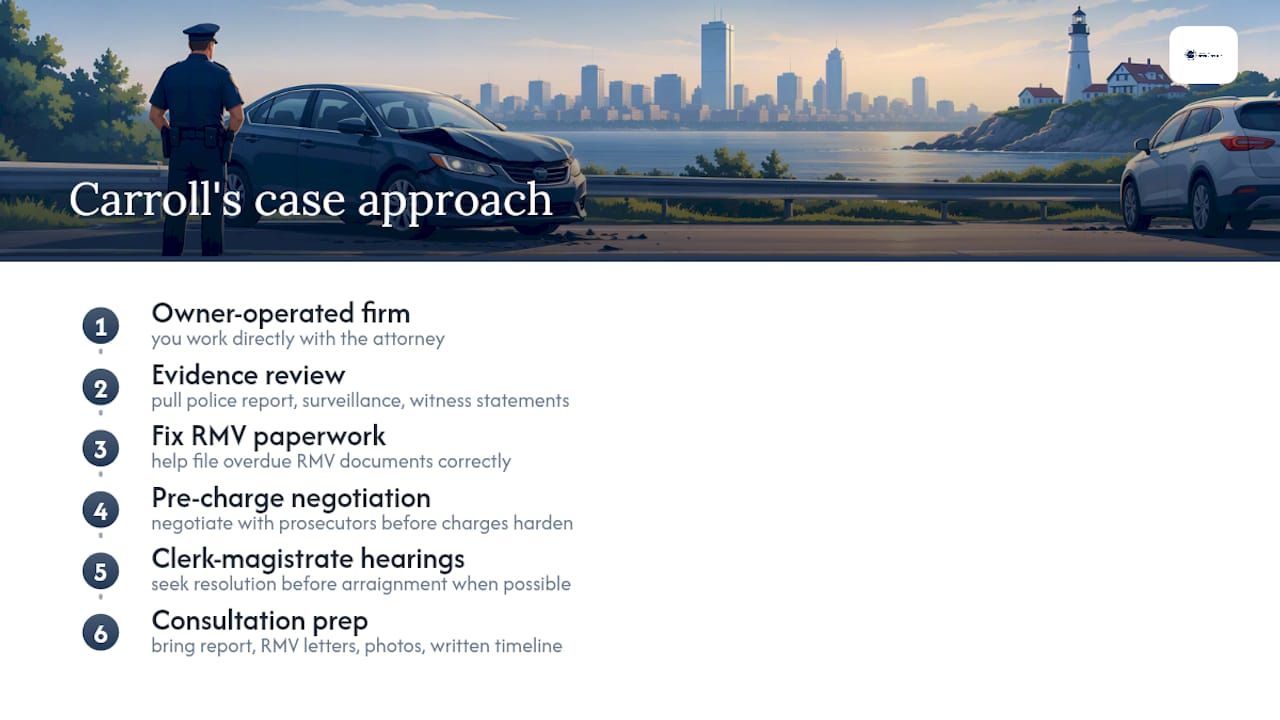
Attorney Michael P. Carroll has spent over a decade defending Massachusetts drivers against criminal charges, and he runs his practice as an owner-operated firm, meaning you work directly with him, not a rotating cast of associates. In a leaving-the-scene case, that starts with pulling the police report and any available surveillance or witness statements to see exactly what evidence the Commonwealth actually has.
From there, the work often involves helping clients get overdue RMV paperwork filed correctly, negotiating with prosecutors before charges harden, and representing clients at clerk magistrate hearings where a case can sometimes be resolved before it ever reaches arraignment. If you're heading into a consultation, bring the police report if you have one, any RMV correspondence, photos from the scene, and a written timeline of what happened. That preparation shapes what options are realistically on the table.
When to Call a Lawyer Right Away
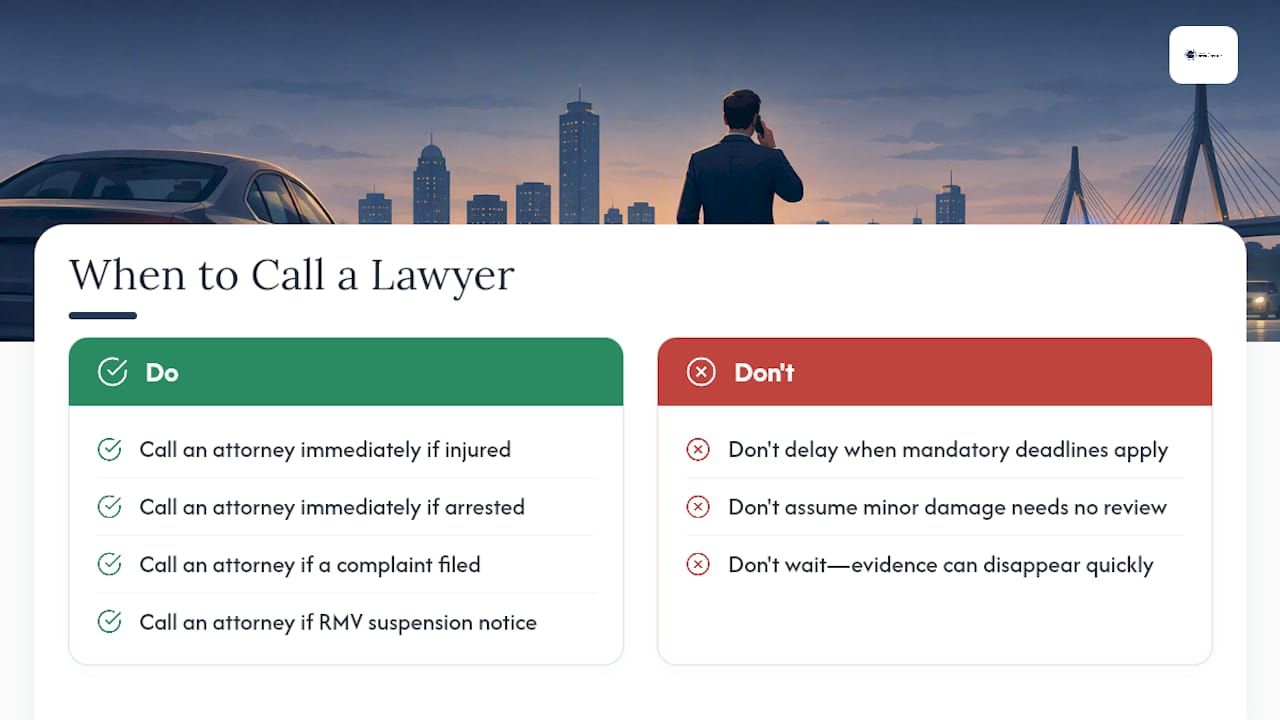
If anyone was injured, you've been arrested, a formal complaint has been filed, or you've received an RMV suspension notice, call an attorney immediately. Those situations carry mandatory minimums or fast-moving administrative deadlines where delay costs you options.
Minor property damage with no injury and no police complaint sometimes resolves through prompt RMV filing and cooperation alone, but a quick consultation still helps you confirm that assumption is safe. Early legal involvement often means the difference between evidence getting preserved while it's fresh and evidence disappearing while you wait to see what happens.
— Michael Carroll
Talk to a Massachusetts Attorney About Your Case Today
A leaving-the-scene charge in Massachusetts moves on two tracks at once, criminal court and RMV administrative action, and most drivers have never navigated either one. This law office offers a client-focused approach emphasizing direct attorney interaction throughout the case, aiming for personalized legal representation.

The firm's approach includes reviewing evidence, assisting with RMV report filings and suspension appeals, and providing representation at clerk magistrate hearings to help resolve leaving-the-scene matters when possible. Bring your police report, any RMV notices, and your own timeline of events to a consultation, and we'll tell you plainly what you're facing and what your realistic options look like. If your case involves suspected impairment alongside a leaving-the-scene allegation, our DUI defense team handles that overlap directly. Start by visiting our criminal defense page to schedule a consultation, and get a straight answer about your case before your next court date or RMV deadline.
This article is general information, not a substitute for advice from a qualified lawyer. Consult a qualified legal professional about your own circumstances before acting on anything here.
Sources
FAQ
What is the 3-hour rule in Massachusetts?
There's no 3-hour reporting rule under Massachusetts law. The actual deadline to file a Crash Operator Report with the RMV and local police is five days from the crash, applying whenever there's an injury, death, or over $1,000 in property damage.
Can you get in trouble if you leave the scene of an accident?
Yes. Leaving the scene is a separate criminal offense under G.L. c. 90 § 24, regardless of who caused the original collision. Penalties range from misdemeanor fines and jail for property damage up to felony mandatory minimums when someone is seriously injured or killed.
Will insurance pay if you leave the scene?
Leaving the scene doesn't automatically void your coverage, but insurers often investigate these claims more aggressively and may raise your rates or non-renew your policy after a conviction. A criminal charge stemming from the same incident can also complicate how quickly a claim gets resolved.
Is there a "no touch" law in Massachusetts?
Massachusetts doesn't have a distinct "no touch" statute separate from the leaving-the-scene law. The property-damage branch of § 24 applies whenever a collision causes damage, whether vehicles physically touched or a driver swerved and struck a fixed object, and the duty to stop and identify yourself applies the same way either way.
What should I do immediately after leaving the scene by mistake?
Return to the scene if it's still safe and practical, or contact the local police department right away to report what happened and provide your information. File your RMV Crash Operator Report within five days, and speak with an attorney before giving a detailed statement to police or your insurer.