
Felony vs. Misdemeanor: Key Differences Explained
Felony vs. Misdemeanor: Key Differences Explained

TL;DR:
- A felony is a crime punishable by more than one year of imprisonment, whereas a misdemeanor carries a maximum of one year or less. This legal distinction influences where a person serves time, their rights, and long-term consequences, such as voting and employment restrictions. Misdemeanor records are easier to expunge, but federal convictions generally cannot be sealed, leaving lasting impacts.
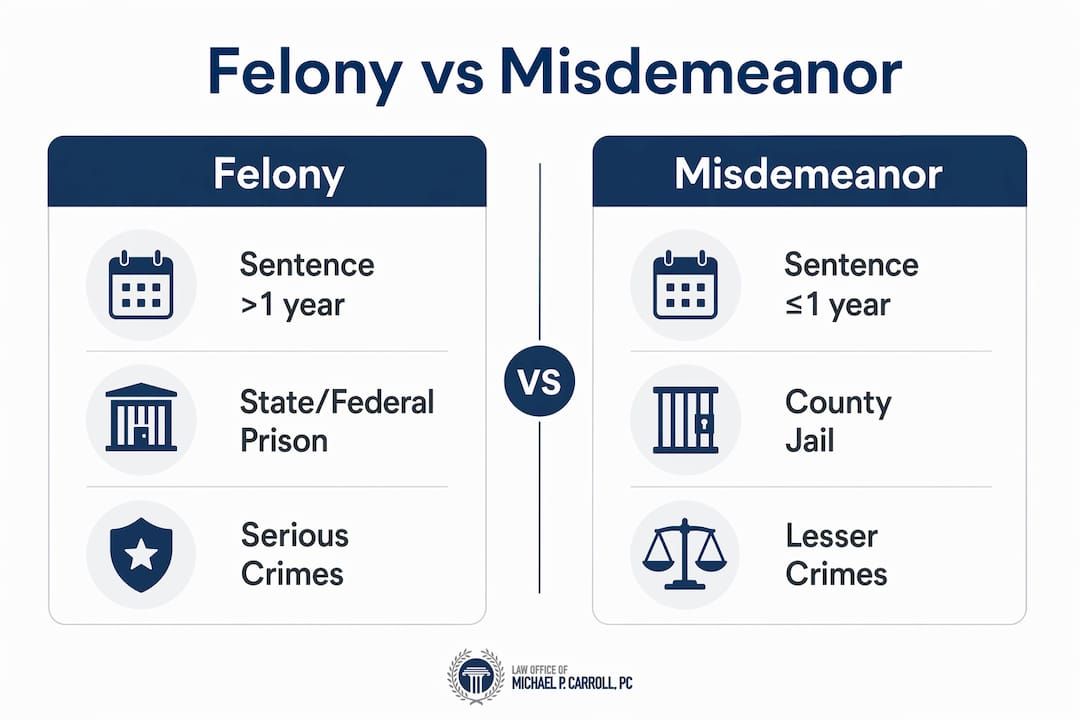
A felony is defined as any crime punishable by more than one year of imprisonment, while a misdemeanor carries a maximum sentence of one year or less. That single threshold, one year of incarceration, drives nearly every legal distinction that follows. Understanding what is the difference between a felony and a misdemeanor matters far beyond sentencing. It shapes where you serve time, what rights you lose, and how hard it becomes to clear your record. For anyone facing criminal charges in Rhode Island or anywhere in the United States, knowing these classifications is the first step toward making informed decisions.
What is the difference between a felony and a misdemeanor in sentencing?
The core legal distinction rests on the statutory maximum sentence, not the sentence a judge actually hands down. A crime is classified as a felony if the law authorizes more than one year of imprisonment for it. A misdemeanor is any offense where the authorized maximum is one year or less.
This distinction matters in a practical way that surprises many people. A judge can sentence a felony defendant to probation or even less than a year in custody. The offense is still a felony. Classification depends on the statute, not the outcome of any individual case.
Where you serve time also differs sharply between the two categories.

| Category | Sentence length | Where served | Common examples |
|---|---|---|---|
| Felony | More than 1 year | State or federal prison | Murder, armed robbery, rape |
| Misdemeanor | 1 year or less | Local county jail | Petty theft, simple assault, DUI (first offense) |
Felony sentences run in state or federal prisons, which are larger facilities designed for longer-term populations. Misdemeanor sentences are served in local county jails, which are typically shorter-stay facilities. That difference in setting affects access to programs, rehabilitation resources, and daily conditions.
Pro Tip: If you are unsure whether a charge against you is a felony or a misdemeanor, look at the maximum sentence listed in the relevant statute, not the sentence the prosecutor is offering. The statutory maximum is what determines the classification.
How do felonies and misdemeanors differ in long-term consequences?
The sentence itself is often the least of a convicted person's concerns. Approximately 8% of all adults in the United States currently hold a felony conviction. That figure represents millions of people living under restrictions that extend far beyond their release date.
Felony convictions trigger what legal scholars call "collateral consequences." These are civil penalties and disabilities that attach automatically to a conviction, separate from any sentence imposed by a court. They include:
- Voting rights. Many states suspend voting rights during incarceration or supervision. Some states impose permanent disenfranchisement for certain felonies.
- Gun ownership. Federal law prohibits anyone convicted of a felony from possessing a firearm. This ban is permanent unless specifically restored.
- Professional licensing. Felony convictions can disqualify people from careers in law, medicine, education, real estate, and financial services.
- Employment and housing. Background checks flag felony records, and many employers and landlords use them as automatic disqualifiers.
- Public benefits. Certain federal benefit programs restrict access for people with drug-related felony convictions.
Misdemeanor convictions carry fewer automatic civil penalties, but they are not consequence-free. A misdemeanor DUI, for example, can affect a commercial driver's license. A misdemeanor domestic violence conviction triggers the federal firearm prohibition under the Lautenberg Amendment, just as a felony does.
The most significant long-term impact of felony convictions may be the civil disabilities that persist beyond incarceration, effectively creating a permanent second-class legal status for millions of Americans.
One critical gap in the system compounds this problem. Judges and prosecutors generally are not required to inform defendants about collateral consequences before they accept a plea deal. The Supreme Court carved out one exception in Padilla v. Kentucky , requiring attorneys to advise non-citizen clients about deportation risk. Beyond that, defendants often learn about these consequences only after the fact.
What are "wobblers" and how do immigration rules complicate classification?
The line between a felony and a misdemeanor is not always fixed. Some states use "wobbler" offenses, which prosecutors can charge as either a felony or a misdemeanor depending on the facts of the case and the defendant's prior record. California uses wobblers extensively. Offenses like assault with a deadly weapon or grand theft can land as either classification based on prosecutorial discretion.
This flexibility creates real consequences for defendants. The same conduct can result in vastly different outcomes depending on which charge a prosecutor files. Defense attorneys often negotiate to have wobbler charges filed or reduced to misdemeanors, which is why legal representation at the charging stage matters enormously.
Immigration law adds another layer of complexity that catches many people off guard:
- Aggravated felony under immigration law. Federal immigration law defines "aggravated felony" differently than criminal law does. Some offenses that qualify as misdemeanors under state criminal law still count as aggravated felonies under immigration statutes.
- Mandatory deportation. Non-citizens convicted of aggravated felonies face mandatory detention and deportation, with almost no discretion available to immigration judges.
- One-year sentence threshold. A misdemeanor conviction with a sentence of at least one year can trigger aggravated felony status under immigration law, even if the offense would never be called a felony in state court.
- Federal and state law conflict. A state may classify an offense as a minor misdemeanor, but federal immigration authorities apply their own definitions. The two systems do not align.
Pro Tip: Non-citizens facing any criminal charge, even a misdemeanor, should consult an attorney before entering any plea. Immigration consequences from a seemingly minor conviction can be severe and permanent.
How does record expungement differ for felonies and misdemeanors?
Clearing a criminal record is far more accessible for misdemeanor convictions than for felonies. Misdemeanor records are generally easier to seal or expunge, and several states have passed "clean slate" laws that automate the sealing process for low-level misdemeanors after a conviction-free waiting period. Pennsylvania and Michigan are among the states with active clean slate statutes as of 2026.
Felony expungement is available in many states but typically requires longer waiting periods, completion of all sentence terms, and in some cases a court hearing. Violent felonies and sex offenses are often excluded entirely from expungement eligibility.
| Record type | Expungement availability | Typical waiting period | Federal record impact |
|---|---|---|---|
| Misdemeanor | Widely available; some states automate it | 1–5 years after sentence | Limited |
| Non-violent felony | Available in many states | 5–10 years after sentence | Not affected |
| Violent felony | Rarely available | Often ineligible | Not affected |
| Federal conviction | Generally not available | No general statute | Permanent |
The federal limitation is the most significant gap in the system. Federal convictions generally cannot be expunged, which means state clean slate laws provide no relief for people with federal records. A person who successfully seals a state misdemeanor conviction may still have that offense appear in a federal background check if it was prosecuted federally.
Expungement also does not erase a record entirely in most states. Sealed records can still be accessed by law enforcement, courts, and some licensing boards. The practical benefit is that the conviction stops appearing on standard employment and housing background checks, which is meaningful but not absolute.
Key Takeaways
The difference between a felony and a misdemeanor is defined by the statutory maximum sentence, and that single distinction drives consequences that can last a lifetime.
| Point | Details |
|---|---|
| Sentencing threshold | Felonies carry more than one year; misdemeanors carry one year or less. |
| Classification is statutory | A crime is a felony based on what the law allows, not what a judge imposes. |
| Collateral consequences | Felony convictions restrict voting, gun rights, licensing, and employment long after release. |
| Wobblers and immigration | Some offenses can be charged either way, and misdemeanors can trigger deportation under federal immigration law. |
| Expungement limits | Misdemeanors are easier to seal; federal convictions have no general expungement statute. |
What I've learned from watching clients underestimate misdemeanor charges
After working with clients across a wide range of criminal charges, the pattern I see most often is this: people treat misdemeanor charges as minor inconveniences and felony charges as life-altering events. The reality is more complicated than that.
A misdemeanor domestic violence conviction permanently strips federal firearm rights under the Lautenberg Amendment. A misdemeanor DUI conviction in Massachusetts can affect a commercial driver's license and, for a non-citizen, trigger immigration consequences that dwarf the criminal penalty. The label "misdemeanor" does not mean the consequences are small. It means the incarceration exposure is capped at one year.
What I find most troubling is how rarely defendants learn about collateral consequences before they accept a plea. The system does not require disclosure in most cases. A client can walk out of a courthouse having accepted what looks like a favorable deal, only to discover months later that the conviction bars them from a professional license they spent years earning.
The classification question also matters at the charging stage, not just at sentencing. Wobbler offenses give prosecutors real leverage. Understanding whether a charge can be negotiated down from a felony to a misdemeanor, or whether a misdemeanor carries hidden federal consequences, requires someone who knows the specific statutes and how local prosecutors operate.
My honest advice: treat every criminal charge seriously, regardless of the label attached to it. The difference between a felony and a misdemeanor matters enormously, but so do the details within each category.
— MPC Law
Facing criminal charges in Rhode Island or Massachusetts?
MPC Law brings over a decade of focused criminal defense experience to clients dealing with felony and misdemeanor charges across Bristol, Norfolk, and Plymouth Counties in Massachusetts.
Whether you are facing a first-time misdemeanor or a serious felony charge, the classification of your offense affects your rights, your record, and your future. MPC Law works directly with each client to examine the specific facts of the case, identify the strongest defense, and pursue the best possible outcome. You work with Michael P. Carroll directly, not a rotating cast of associates. For criminal defense representation in Massachusetts, contact MPC Law to schedule a consultation and get clear answers about where your case stands.
FAQ
What is the main difference between a felony and a misdemeanor?
A felony is punishable by more than one year of imprisonment, while a misdemeanor carries a maximum sentence of one year or less. That threshold determines where you serve time and what long-term consequences attach to the conviction.
Can a misdemeanor have the same consequences as a felony?
Yes, in specific situations. A misdemeanor domestic violence conviction triggers a federal firearm ban, and certain misdemeanor convictions with a one-year sentence can qualify as aggravated felonies under immigration law, leading to mandatory deportation.
What is a "wobbler" offense?
A wobbler is a crime that prosecutors can charge as either a felony or a misdemeanor based on the facts of the case and the defendant's record. Defense attorneys often negotiate to have wobbler charges filed as misdemeanors to limit long-term consequences.
Is it easier to expunge a misdemeanor than a felony?
Yes. Misdemeanor records are generally easier to seal or expunge, and several states have enacted clean slate laws that automate sealing after a waiting period. Felony expungement requires longer waiting periods and is often unavailable for violent offenses.
Do felony convictions affect voting rights?
Felony convictions suspend voting rights in many states, at least during incarceration or supervision. Some states impose longer or permanent restrictions. The specific rules vary by state, so the impact depends on where the conviction occurred and where the person lives.